Travel Trailer vs Fifth Wheel vs Class C: How to Choose
In this guide
- The three types in one table
- Travel trailer: the default for a reason
- Fifth wheel: the most home for the money, if you own the truck
- Class C motorhome: no towing, no hitching, higher bills
- Tow vehicle reality check
- License rules: usually nothing, sometimes an endorsement
- Campground fit: length decides where you can sleep
- Cost of ownership, side by side
- A one-minute decision
Pick by the vehicle you already own and the campgrounds you actually want to use, not by floor plan. If you have a half-ton truck or a capable SUV, a travel trailer under about 7,000 pounds loaded is the only one of the three that works without buying another vehicle. If you own or will buy a three-quarter-ton or one-ton pickup and want the most living space per dollar, a fifth wheel wins. If you do not want to tow at all, or you will mostly stay in national park campgrounds with 30-foot limits, a Class C motorhome is the answer, and you pay for that convenience in purchase price, insurance and depreciation.
This guide compares the three on the things that are measurable: length, weight, hitch or pin weight, tow vehicle, license rules, campground fit and cost, using manufacturer spec pages (Grand Design, Keystone, Winnebago), the California DMV handbook and Texas DPS license classes, Progressive’s premium averages and J.D. Power’s used-value data, all as read in October 2026. Specs change by model year; confirm on the manufacturer’s current page and the weight label on the unit before buying.
The three types in one table
| Travel trailer | Fifth wheel | Class C motorhome | |
|---|---|---|---|
| How it connects | Ball hitch on a receiver behind the bumper | Kingpin into a hitch mounted in a pickup bed | Not towed; drives itself, can tow a small car or boat |
| Typical length (manufacturer examples) | 26 to 37 ft (Grand Design Imagine 2300MK to 3210BH) | 33 to 44 ft (Reflection 303RLS to Montana) | 24 to 33 ft (Winnebago E-450 floorplans 23’10” to 32’9”) |
| Example unloaded weight | 6,218 to 8,725 lb (Imagine) | 10,325 to 13,275 lb (Reflection) | GVWR 14,500 lb; GCWR 22,000 lb (Winnebago) |
| Hitch / pin weight | 672 to 991 lb (Imagine, dry) | 1,985 to 2,770 lb (Reflection, dry) | Drawbar 7,500 lb, 500 lb tongue (what it can tow) |
| Minimum realistic tow vehicle | Mid-size SUV for small units; half-ton truck for most | Three-quarter-ton or one-ton pickup | None; a toad or small trailer optional |
| Interior height / layout | Single level, lower ceilings | Raised bedroom over the hitch, residential feel | Cab-over bunk, compact |
| Insurance (Progressive 2024 avg) | $594 / yr | Same towable product, generally similar | $1,052 / yr |
| Used-value trend (J.D. Power Q2 2026) | Flat year over year | Slightly down | Down about 10 percent |
| Best for | First-time buyers, existing tow vehicle, tight campgrounds | Long stays, full-timers, most space per dollar | Non-towers, national park loops, couples and small families |
Travel trailer: the default for a reason
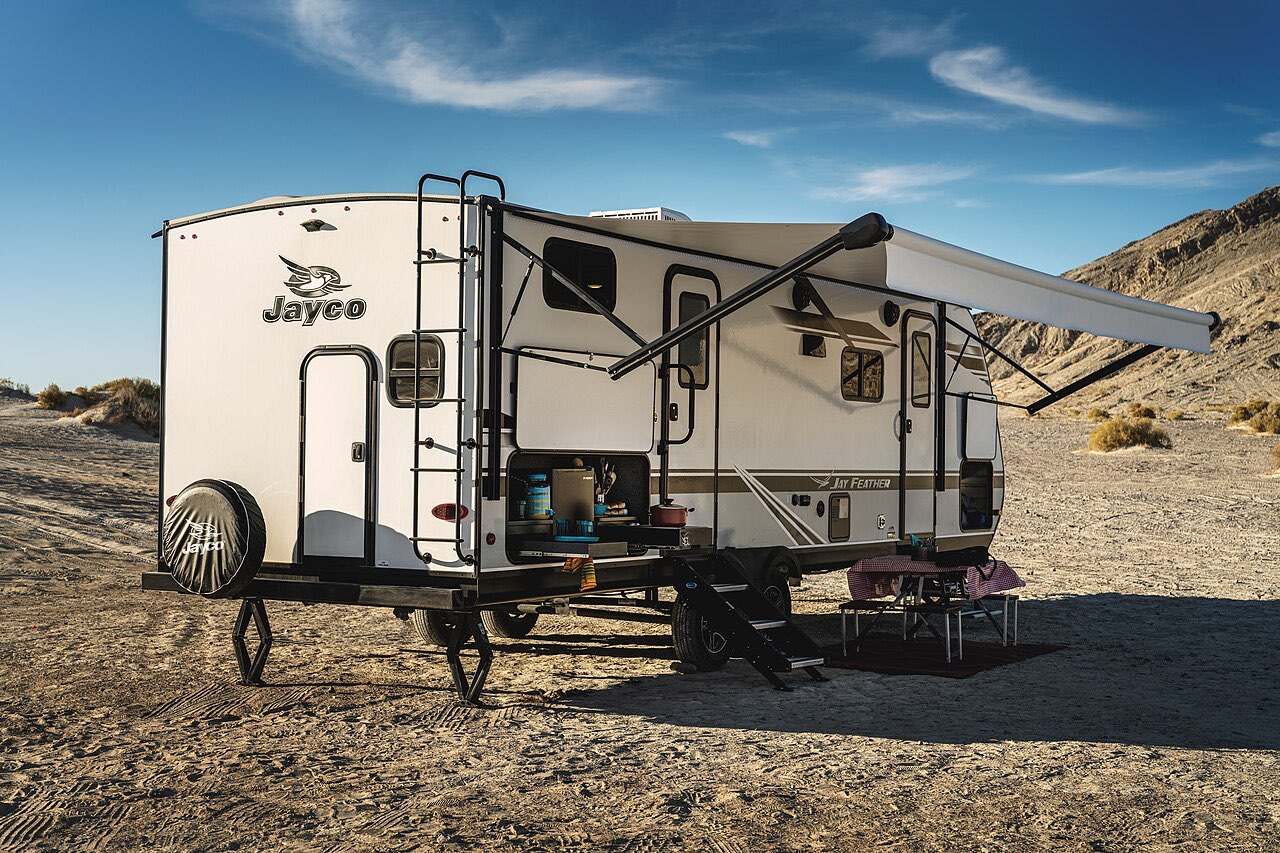
A conventional travel trailer rides on a ball hitch behind the tow vehicle. It is the cheapest of the three to buy, the easiest to match to a vehicle you already own, and the one with the widest choice of sizes, from teardrops under 2,000 pounds to 37-foot bunkhouses.
Take Grand Design’s Imagine line as a representative mid-market example from its spec page in October 2026:
| Model | Exterior length | UVW (dry) | Hitch weight (dry) | GVWR |
|---|---|---|---|---|
| Imagine 2300MK | 26’ 6” | 6,218 lb | 672 lb | 7,850 lb |
| Imagine 2470BH | 29’ 0” | 6,689 lb | 749 lb | 7,850 lb |
| Imagine 2670MK | 32’ 3” | 7,475 lb | 785 lb | 10,195 lb |
| Imagine 3210BH | 36’ 11” | 8,725 lb | 991 lb | 10,195 lb |
The numbers to notice are the GVWR and the hitch weight. A trailer is never towed at its dry weight; water, propane, batteries and gear typically add 1,000 to 2,000 pounds, and the loaded tongue weight should land at 10 to 15 percent of the loaded trailer weight. On the 2670MK that means planning for a 9,000-pound trailer with a 1,000-plus-pound tongue, which, once the hitch itself and passengers are added, exceeds the payload on most half-ton trucks. Our towing capacity vs payload explainer walks through the door-jamb arithmetic, and can a half-ton tow a 30-foot travel trailer answers the most common version of the question.
Who it suits: anyone buying their first RV, anyone who already owns a truck or large SUV, and anyone who wants to unhitch and drive to town or a trailhead in a normal vehicle.
Where it falls short: sway. A long, light box behind a bumper hitch needs a weight-distribution hitch with sway control once it is much above 5,000 pounds, and crosswinds and passing trucks are felt. Backing takes practice because the pivot point is behind the vehicle.
Fifth wheel: the most home for the money, if you own the truck
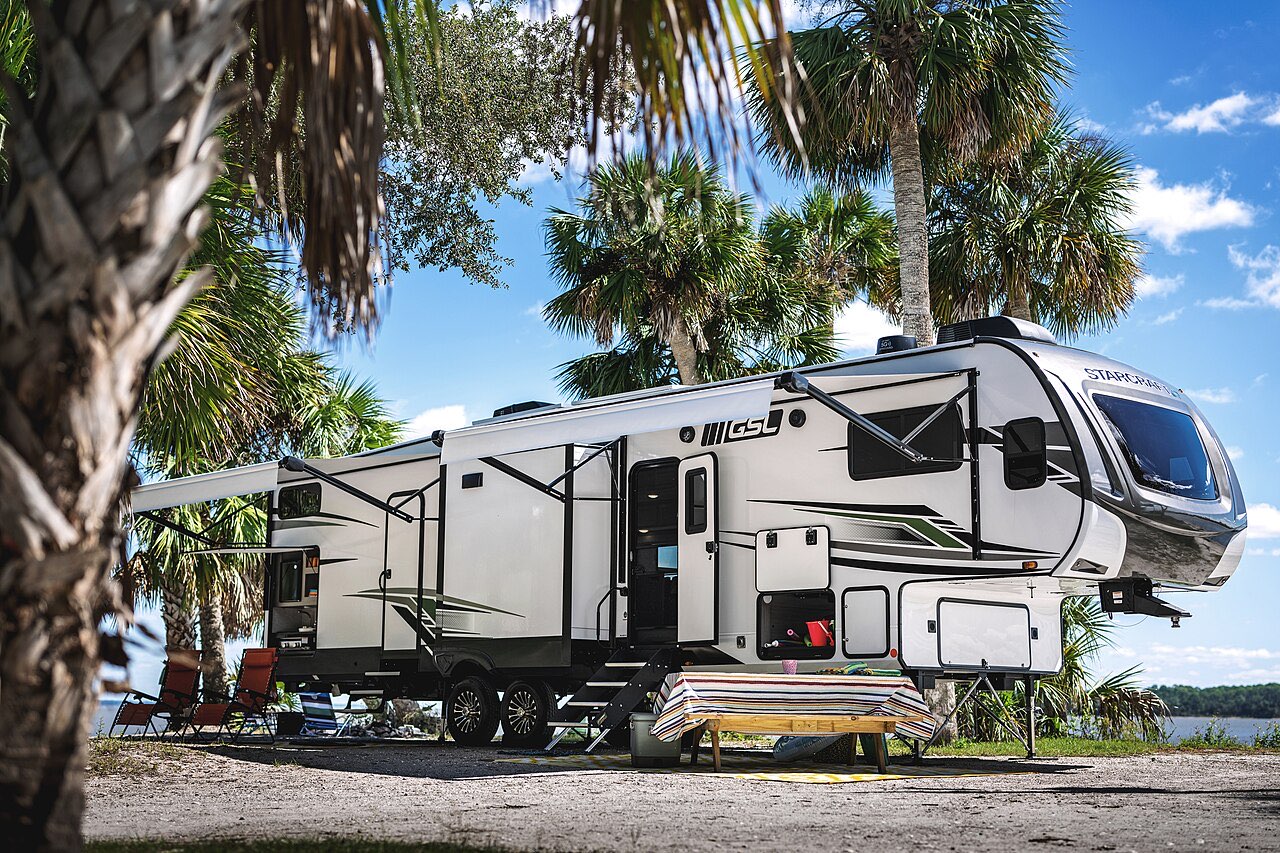
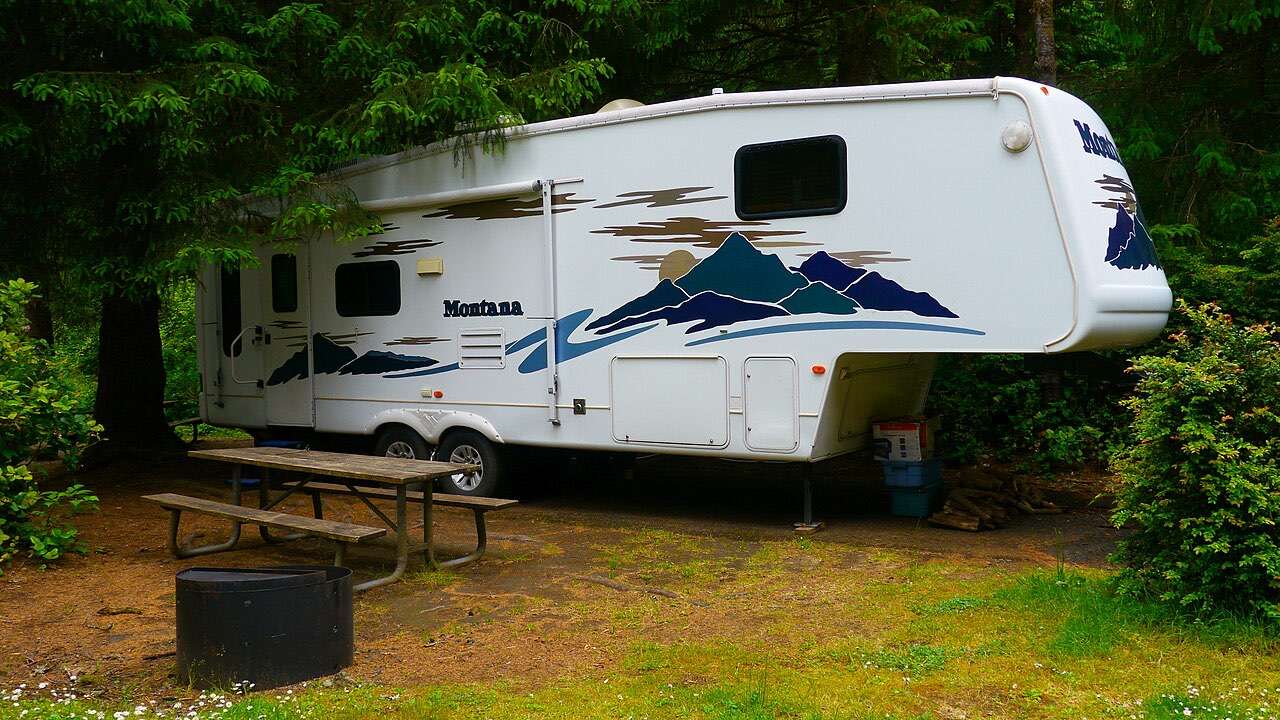
A fifth wheel’s front section rides over the truck’s bed on a kingpin and hitch. Moving the pivot point forward of the rear axle is what makes fifth wheels tow more steadily and turn more sharply than travel trailers of the same length, and the raised front section gives a split-level interior with a separate bedroom and higher ceilings in the main living area.
Grand Design’s Reflection line, from its fifth wheel spec page, shows what “mid-size” means in this category:
| Model | Exterior length | UVW (dry) | Hitch (pin) weight (dry) | GVWR |
|---|---|---|---|---|
| Reflection 303RLS | 32’ 10” | 10,325 lb | 1,985 lb | 11,995 lb |
| Reflection 337RLS | 35’ 7” | 11,475 lb | 2,475 lb | 13,995 lb |
| Reflection 311BHS | 36’ 11” | 11,700 lb | 2,450 lb | 13,995 lb |
| Reflection 360FLS | 39’ 2” | 12,692 lb | 2,745 lb | 14,995 lb |
| Reflection 367BHS | 41’ 1” | 13,275 lb | 2,770 lb | 14,995 lb |
Keystone’s Montana series, a step up in luxury, lists lengths of 35’ 11” to 43’ 10”, a height of 13’ 4” and weights from 14,930 to 17,085 pounds on its series page. That 13-foot-plus height matters: it is taller than most travel trailers and Class Cs, and it is the dimension that meets low bridges and tree limbs.
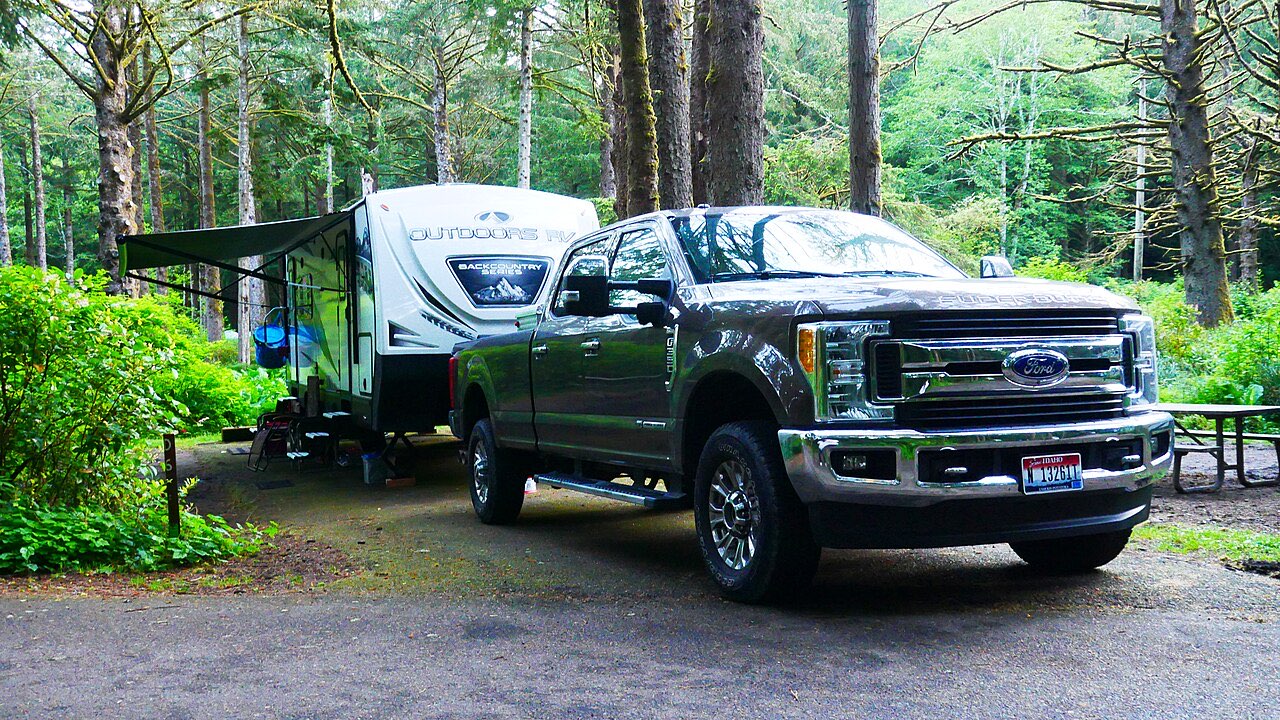
The pin weight is the whole tow-vehicle story. Fifth wheels put 15 to 25 percent of their weight on the truck, so a 14,000-pound loaded Reflection drops roughly 2,500 to 3,000 pounds into the bed before you add the hitch (often 150 to 250 pounds), passengers and anything else. That is three-quarter-ton territory at minimum and one-ton for the longer floor plans. Ignore the truck’s advertised maximum tow rating; the payload figure on its own door-jamb label is what runs out first. Our how to weigh your RV at a CAT scale guide shows how to confirm the real numbers.
Who it suits: long-stay travelers and full-timers, families who want a separate bedroom and bunk room, and anyone who already owns a heavy-duty pickup.
Where it falls short: it needs that pickup, and the bed is occupied by the hitch. It is the longest and tallest of the three, so it fits the fewest public campgrounds, and above certain weights it triggers license endorsements in some states (below).
Class C motorhome: no towing, no hitching, higher bills
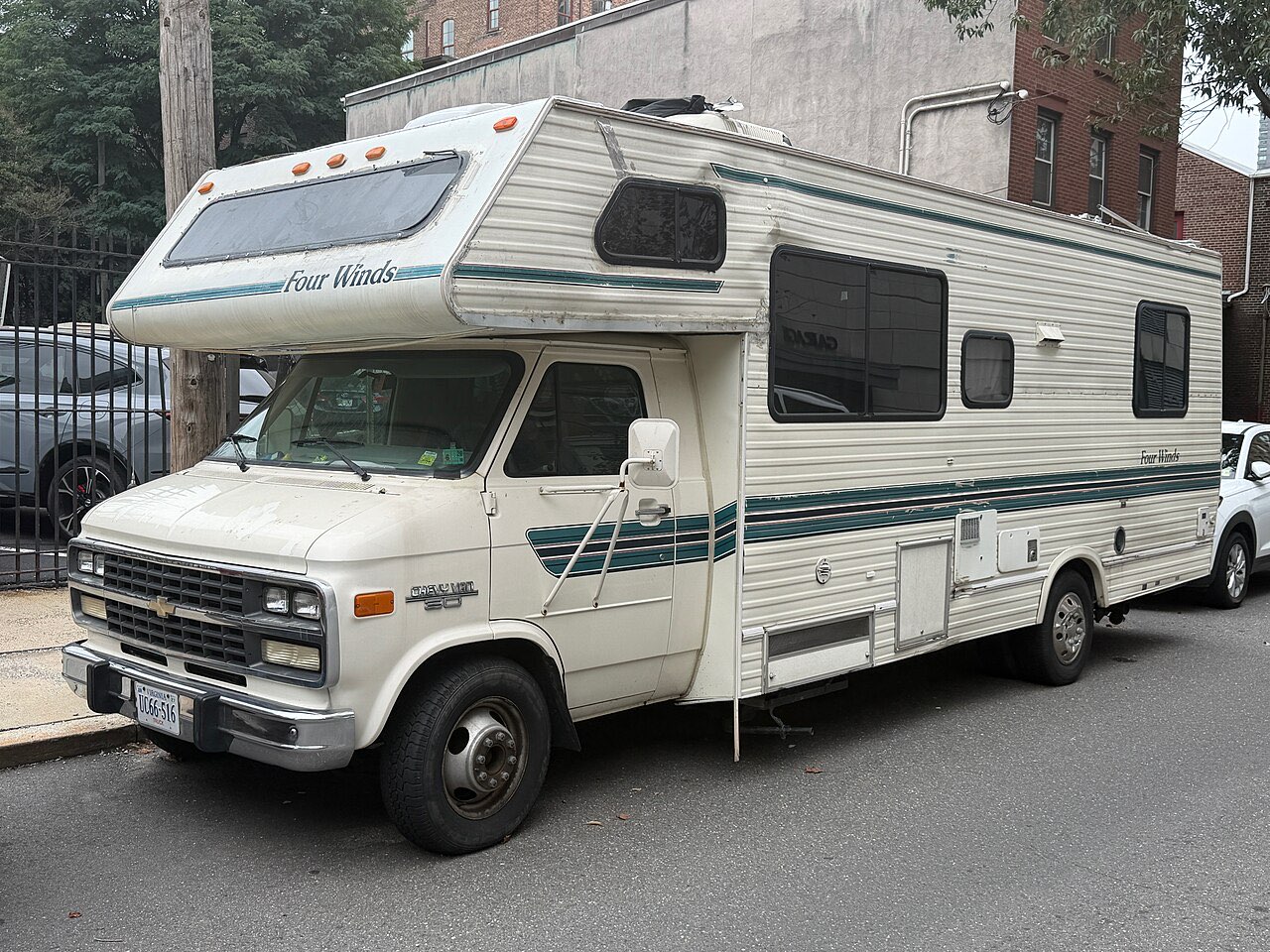
A Class C is built on a cutaway van chassis, usually a Ford E-series, with the sleeping or storage bunk over the cab that gives it its profile. Everything is one vehicle: you drive it, park it, plug it in and you are camped.
Winnebago’s current E-450 Class C floorplans, per its specification page, run from 23’ 10” to 32’ 9” in exterior length on a chassis with a 14,500-pound GVWR and 22,000-pound GCWR, a 7.3-litre 350 hp V8, 55-gallon fuel tank, 40 to 44 gallons of fresh water, a 4,000-watt generator, and a 7,500-pound drawbar with a 500-pound maximum tongue load. The Minnie Winnie line’s listed starting price was $146,248 MSRP in October 2026, before freight, taxes and dealer fees.
Three consequences follow from those figures:
- Payload is tighter than it looks. Subtract a loaded 30-foot coach’s weight from 14,500 pounds and the remaining capacity for people, water, food and gear can be well under 1,500 pounds. Weigh it.
- You can tow, modestly. 7,500 pounds covers a small car on a dolly or a boat, which is how many Class C owners solve the “stuck at the campsite” problem a trailer owner never has.
- It is a vehicle for insurance and depreciation purposes. Progressive’s 2024 countrywide average premium was $1,052 for a motorhome versus $594 for a travel trailer, and J.D. Power’s Q2 2026 used-value report showed Type C values down about 10 percent year over year while travel trailers were essentially flat. Our first-year RV ownership costs guide adds the rest of the bill.
Who it suits: people who do not want to tow, couples or small families doing national park loops, and anyone who values setting up in five minutes over interior space.
Where it falls short: when the chassis is in the shop, so is your house; every grocery run means breaking camp unless you tow a car; and a comparable amount of living space costs far more than in a trailer.
Tow vehicle reality check
The brochure maximum is the least useful number on a truck. Ford’s published maximum conventional towing for the 2025 F-150 is 13,500 pounds, but that applies to one specific cab, bed, engine and package combination; most configurations rate thousands of pounds lower, and payload is the limit that bites first on every one of them. Always read the yellow tire-and-loading label on the driver’s door jamb of the actual truck, which gives the real payload for that vehicle as built.
A quick matching guide, with the caveat that the arithmetic has to be done per vehicle:
| Tow vehicle | Realistic match |
|---|---|
| Mid-size SUV or crossover | Small travel trailers, typically under 3,500 lb loaded |
| Full-size SUV or half-ton truck | Travel trailers up to roughly 6,000 to 7,500 lb loaded, depending on payload |
| Three-quarter-ton pickup | Any travel trailer; fifth wheels up to roughly 12,000 to 14,000 lb loaded |
| One-ton single rear wheel | Fifth wheels to about 16,000 lb loaded |
| One-ton dual rear wheel | The heaviest fifth wheels, including the Montana class at 15,000 to 17,000 lb |
Tongue and pin weight, not trailer weight, is what to calculate first; our travel trailer tongue weight guide explains the 10 to 15 percent rule and how to measure it.
License rules: usually nothing, sometimes an endorsement
Most states let you drive any of the three on an ordinary license. Two large states show where the exceptions sit, from their official pages as read in October 2026:
California (DMV Recreational Vehicles and Trailers Handbook):
- A basic Class C license covers any housecar (motorhome) 40 feet or less, and towing a trailer coach or fifth wheel under 10,000 pounds GVWR when not for compensation.
- A fifth-wheel recreational trailer endorsement on a Class C license is required to tow a fifth wheel over 10,000 but not over 15,000 pounds GVWR. That covers most of the Reflection table above.
- A noncommercial Class B is required for a housecar over 40 feet but not over 45 feet.
- A noncommercial Class A is required to tow a travel trailer over 10,000 pounds GVWR or a fifth wheel over 15,000 pounds. A Montana-class fifth wheel needs one.
Texas (DPS classes of driver licenses):
- Operators of recreational vehicles driven for personal use are exempt from a commercial license, but “may still need a Class A or B license if the vehicle meets the weight requirement.”
- Class A is needed for a single vehicle with a GVWR of 26,001 pounds or more, or a combination with a GCWR of 26,001 pounds or more when the towed unit’s GVWR exceeds 10,000 pounds. A one-ton truck (GVWR around 11,000 to 14,000 pounds) towing a 15,000-pound-GVWR fifth wheel reaches that threshold.
- Class B covers a single vehicle of 26,001 pounds or more towing no more than 10,000 pounds. Class C motorhomes at 14,500 pounds GVWR are well under it.
Other states range from nothing at all to similar weight-based tiers; Florida, by most accounts, requires only a standard license for personal RVs, but confirm on your own state’s DMV page, because the thresholds above show that a heavy fifth wheel is the type most likely to trigger a test.
Campground fit: length decides where you can sleep
Public campgrounds, especially in national parks, were laid out decades ago for shorter rigs. Yellowstone’s campground page, for example, lists an RV-plus-vehicle maximum per campground with a 45-foot ceiling only at certain sites May through mid-October, and notes that Fishing Bridge RV Park, the park’s only full-hookup campground, is for hard-sided units only. A 30-foot Class C or a 26-foot travel trailer plus truck fits the great majority of federal sites; a 40-foot fifth wheel plus a crew-cab one-ton is a combined 60-plus feet and fits a small minority, often only in private parks outside the gate.
For park-by-park numbers, our sister site covers national park RV size limits and which national park campgrounds have hookups. The short version: if national parks are the plan, buy short, and treat 30 feet of trailer or 32 feet of motorhome as the practical ceiling. If private resorts and long seasonal stays are the plan, length costs you almost nothing and the fifth wheel’s space wins.
Cost of ownership, side by side
Purchase price overlaps enormously across the three, so the structural differences matter more:
- Travel trailer: lowest entry price, lowest insurance (about $594 a year on Progressive’s 2024 average), flat used values in the latest J.D. Power data, and no second drivetrain to maintain. Requires a tow vehicle you may already own.
- Fifth wheel: more trailer per dollar than any motorhome, towable-level insurance, slightly softening used values. Requires a heavy-duty truck that, if you do not own one, costs as much as the trailer.
- Class C: highest insurance (about $1,052 a year average), a chassis with its own oil changes, tires and brakes, and the sharpest used-value decline right now at about 10 percent year over year. Saves you a tow vehicle, a hitch and the hitching routine.
If you are still deciding whether to buy at all, our rent vs buy RV guide suggests renting each type for a long weekend first; a week in a Class C followed by a week towing a trailer settles this question faster than any table.
A one-minute decision
- Do you own a three-quarter-ton or bigger pickup, or want to? Yes: fifth wheel if you want space, travel trailer if you want flexibility. No: continue.
- Do you own a half-ton truck or a full-size SUV? Yes: travel trailer under about 7,000 pounds loaded, after checking payload. No: continue.
- Are you willing to tow at all? No: Class C, and keep it near 30 feet if national parks are the goal. Yes: buy the tow vehicle first, then return to step 1.
Whatever you choose, confirm every weight on the manufacturer’s current spec page and the yellow label on the unit itself, and confirm license rules on your state’s DMV page; the California and Texas thresholds above are as published in October 2026.
Frequently asked questions
Which is easier to tow, a travel trailer or a fifth wheel?
A fifth wheel is more stable at speed and easier to back up because the hitch sits over the truck's rear axle instead of behind the bumper, which largely eliminates sway. The trade-off is that it needs a pickup with an open bed and a fifth-wheel hitch, and its pin weight of roughly 2,000 to 2,800 pounds on mid-size models, per Grand Design's Reflection specs, uses up most of a three-quarter-ton truck's payload. A travel trailer tows behind more vehicles but needs a weight-distribution hitch and sway control once it gets heavy.
Do I need a special license to drive a Class C or tow a fifth wheel?
In most states, no, but check yours. California's DMV requires a fifth-wheel recreational trailer endorsement to tow a fifth wheel over 10,000 pounds GVWR and a noncommercial Class A license over 15,000 pounds; a standard Class C covers any motorhome 40 feet or shorter. Texas requires a Class A or B non-commercial license when a single vehicle has a GVWR of 26,001 pounds or more, or a combination's GCWR reaches 26,001 pounds with a towed unit over 10,000 pounds. Nearly every Class C motorhome is under those thresholds.
What truck do I need for a fifth wheel?
Realistically a three-quarter-ton or one-ton pickup. Grand Design's Reflection fifth wheels list hitch weights from 1,985 to 2,770 pounds and GVWRs from 11,995 to 14,995 pounds; the hitch weight plus the fifth-wheel hitch itself, passengers and cargo all count against the truck's payload on its door-jamb label, and half-ton payloads are rarely enough. Run the numbers on the specific truck and trailer, not the brochure's maximum tow rating.
Is a Class C cheaper to own than a trailer?
No. It costs more to buy, insure and depreciate. Winnebago lists its Minnie Winnie Class C from $146,248 MSRP; Progressive's 2024 average motorhome premium was $1,052 a year against $594 for a travel trailer; and J.D. Power's Q2 2026 data showed used Class C values down about 10 percent year over year while travel trailers were flat. What a Class C saves you is a tow vehicle and the hitching routine.
Which RV type fits national park campgrounds best?
The shortest one. Many national park campgrounds cap combined length in the 25 to 35 foot range, and a 30-foot Class C or a 25-foot travel trailer behind a truck fits far more sites than a 40-foot fifth wheel. Yellowstone's campground table, for example, lists per-campground maximums with a 45-foot ceiling only at certain sites in season. Check the specific park's limit before you buy a long rig.
Keep planning
- 30 Amp vs 50 Amp RV Hookups Explained
30 amp vs 50 amp RV service explained: 3,600 vs 12,000 watts, what runs at once, dogbone adapters, pedestal testing and the voltage limits an EMS enforces.
Updated Oct 2026 - Boondocking for Beginners: Rules, Water and Power
Boondocking for beginners: BLM and Forest Service dispersed camping rules, 14-day limits, Motor Vehicle Use Maps, Leave No Trace, water and power budgets.
Updated Oct 2026 - First-Year RV Ownership Costs You Don't See at the Dealer
First-year RV ownership costs beyond the sticker: sales tax, registration, insurance, storage, hitch gear, tires, warranties and depreciation, with official figures.
Updated Oct 2026