Towing Capacity vs Payload: What Actually Limits Your Truck
In this guide
- The six weights, in plain language
- The sticker that matters: the Tire and Loading label
- How towing capacity is calculated, and why it is optimistic
- Why payload runs out first: tongue weight
- A worked example: crew-cab half-ton, 29-foot trailer
- Fifth wheels make the problem bigger
- What a weight-distribution hitch does and does not do
- How to check your own numbers in one trip
- Mistakes that put trucks over payload
- The short version
Payload is the number that limits a half-ton truck towing a travel trailer, not towing capacity. The brochure says 11,000 or 13,000 lb of towing; the yellow sticker in your door jamb says 1,500 or 1,800 lb of payload, and the trailer’s tongue weight, your passengers and your gear all have to fit inside that smaller number. Most overloaded trucks on the road are under their tow rating and over their payload at the same time.
This guide gives the official definitions, shows where each number lives on your truck, works a realistic example, and explains why manufacturers’ headline figures and the sticker on your door can be 1,000 lb apart. Everything here is from manufacturer and federal sources read in October 2026, and the only numbers that matter for your truck are the ones on its own labels and in its own manual.
The six weights, in plain language
Ford’s towing dictionary is unusually clear, so these definitions follow it where they can.
| Term | What it means | Where to find it |
|---|---|---|
| Curb weight | The truck with a full tank of fuel and all installed equipment, no people, no cargo | Owner’s manual or scale ticket |
| GVWR (Gross Vehicle Weight Rating) | “The maximum allowable weight of the fully-loaded vehicle”, truck only, including everything in and on it and the tongue weight | Safety Certification Label, driver’s door jamb |
| GAWR (Gross Axle Weight Rating) | Maximum weight each axle may carry, front and rear listed separately | Same label |
| Payload capacity | Maximum combined weight of passengers and cargo the truck can carry. Ford’s definition of payload is explicit that it includes “the Tongue Weight if you are towing” | Tire and Loading Information label, driver’s B-pillar |
| GCWR (Gross Combined Weight Rating) | Maximum weight of the loaded truck and loaded trailer together | Towing guide or owner’s manual, by engine and axle ratio |
| Towing capacity | Maximum trailer weight, derived from GCWR minus the truck’s base curb weight | Towing guide, marketing pages |
Two of these are limits you can read off your own truck in thirty seconds (GVWR and payload). Two are per-configuration numbers you have to look up (GCWR and towing capacity). All of them apply at once, and the lowest one wins.
The sticker that matters: the Tire and Loading label
Open the driver’s door and look at the B-pillar. There are usually two labels. The white Safety Certification Label lists GVWR and the front and rear GAWR. The yellow-and-white Tire and Loading Information label is the one federal regulation 49 CFR 571.110 requires to state, word for word, “The combined weight of occupants and cargo should never exceed XXX kilograms or XXX pounds.”
That number is your payload. Ford’s dictionary says the same thing in its own words: the maximum payload for your vehicle “appears on the Tire and Loading Information label, which is on the driver door jamb”, and it reflects the truck as built by the assembly plant, options included. A sunroof, a bigger battery, running boards, a spray-in liner, 20-inch wheels and a heavier trim level all come out of it before you buy the truck. Dealer-installed accessories and anything you bolt on afterwards come out of it too, and the sticker does not update.
This is why two trucks with identical engines and identical advertised towing can have payload stickers 600 lb apart. It is also why the advertised maximum payload, 2,440 lb on the 2026 F-150 as Ford lists it, belongs to a specific stripped-down configuration most buyers never see on a lot.
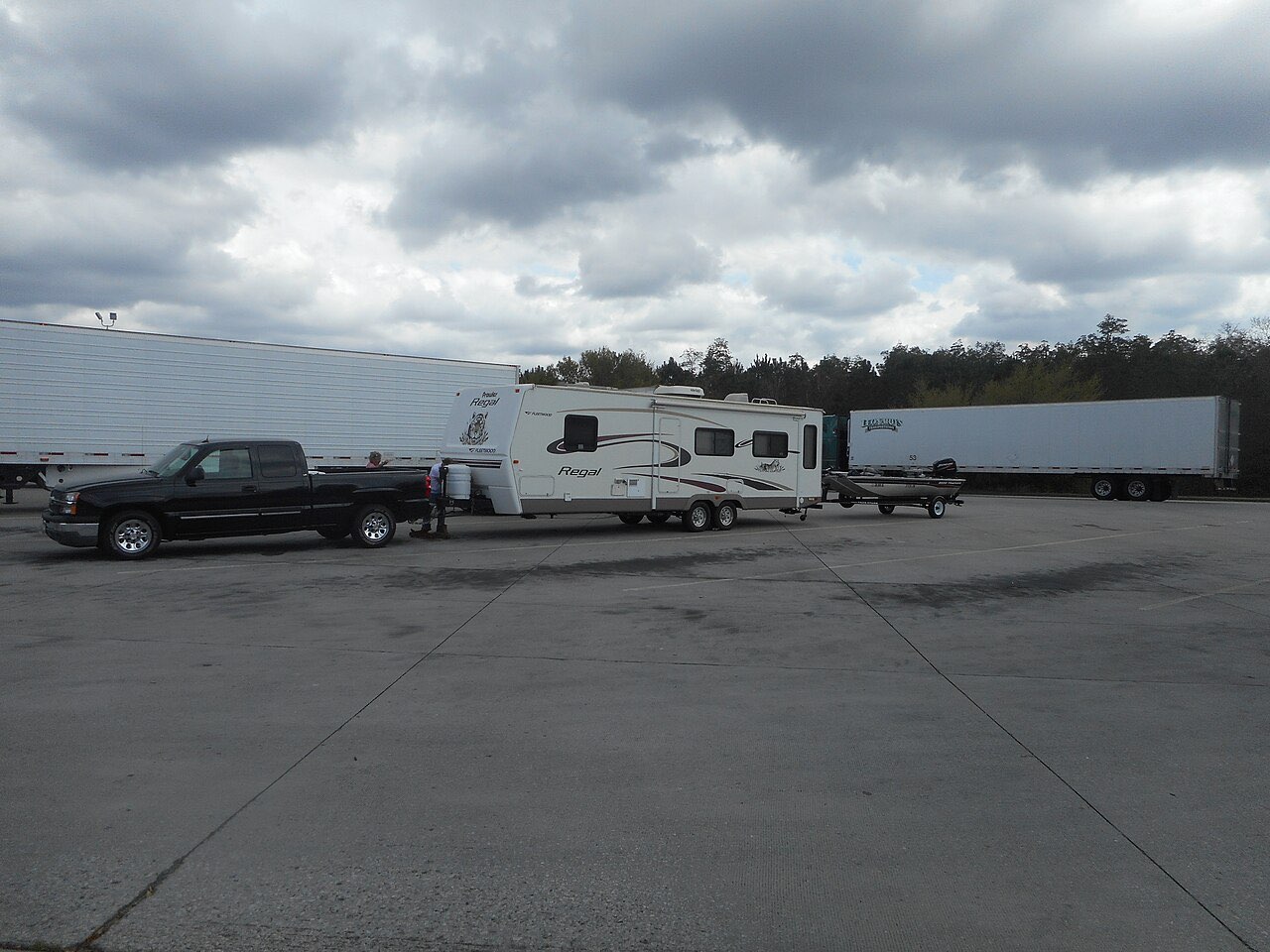
How towing capacity is calculated, and why it is optimistic
Towing capacity is not a measurement of your truck. It is arithmetic: GCWR minus the truck’s base curb weight, for a base truck with a 150 lb driver and nothing else aboard. Ford’s F-150 page states that the top rating of 13,500 lb applies to one configuration, an XLT SuperCrew 4x4 with the 6.5-foot box, the 3.5L EcoBoost, the Tow/Haul Package and the Max Tow axle, and that “the exact towing capacity of F-150 trucks varies significantly depending on vehicle configuration.” The other 2026 F-150 engines Ford lists are 8,400 lb (2.7L EcoBoost), 11,600 lb (PowerBoost hybrid) and 12,800 lb (5.0L V8), again each for a best-case build.
Every pound you add to the truck after that, a second adult, a tonneau cover, a full bed, reduces how much trailer fits under GCWR. Realistic towing capacity for a loaded family truck is often 1,000 to 1,500 lb below the brochure. But for a travel trailer behind a half-ton, even that reduced figure is rarely the binding limit. The binding limit is the sticker.
Since the 2015 model year the domestic makers have published light-duty tow ratings to the SAE J2807 procedure, after Toyota adopted it first. J2807 standardizes the test conditions (grade launches, a long hot climb, acceleration targets), which made ratings more comparable across brands. It did not make them more relevant to payload.
Why payload runs out first: tongue weight
A conventional travel trailer carries part of its weight on the hitch ball. Hitch manufacturer Equal-i-zer’s FAQ puts it the way almost every hitch maker and retailer does: “most trailer’s tongue weights end up being between 10% and 15% of the overall trailer weight.” That tongue weight rides on the truck, so by Ford’s definition it is payload.
Compare the two limits for the same trailer:
- A trailer loaded to 7,500 lb uses 7,500 lb of an 11,000 lb tow rating. Comfortable.
- The same trailer puts 750 to 1,125 lb on the hitch. On a truck with a 1,600 lb payload sticker, that is half to two-thirds of the entire budget before anyone gets in.
Brochure “dry hitch weight” figures understate this. Grand Design’s spec sheets for the Imagine 2970RL list 809 lb of hitch weight on a 7,880 lb UVW and note that both figures “are based on the average weight of the standard build.” Load that trailer with water, propane, batteries, food, bedding and bikes and the tongue weight climbs with it. Front storage compartments and front-mounted batteries push it up further. The only way to know your tongue weight is to measure it; the tongue weight guide covers three ways to do that.
A worked example: crew-cab half-ton, 29-foot trailer
Take a common pairing. The numbers are illustrative, chosen from the ranges manufacturers publish, and your own labels will differ.
The truck. Crew-cab, 4x4, mid-level trim half-ton with an 11,000 lb advertised tow rating and a door-jamb payload of 1,650 lb. (Ford’s 2026 F-150 range runs from a best-case 2,440 lb downward; dealer-listed figures for 2026 Ram 1500, Silverado 1500 and Tundra crew cabs commonly fall between about 1,500 and 2,000 lb depending on engine and trim. Check your own sticker; manufacturer sites could not be fetched for exact tables at the time of writing.)
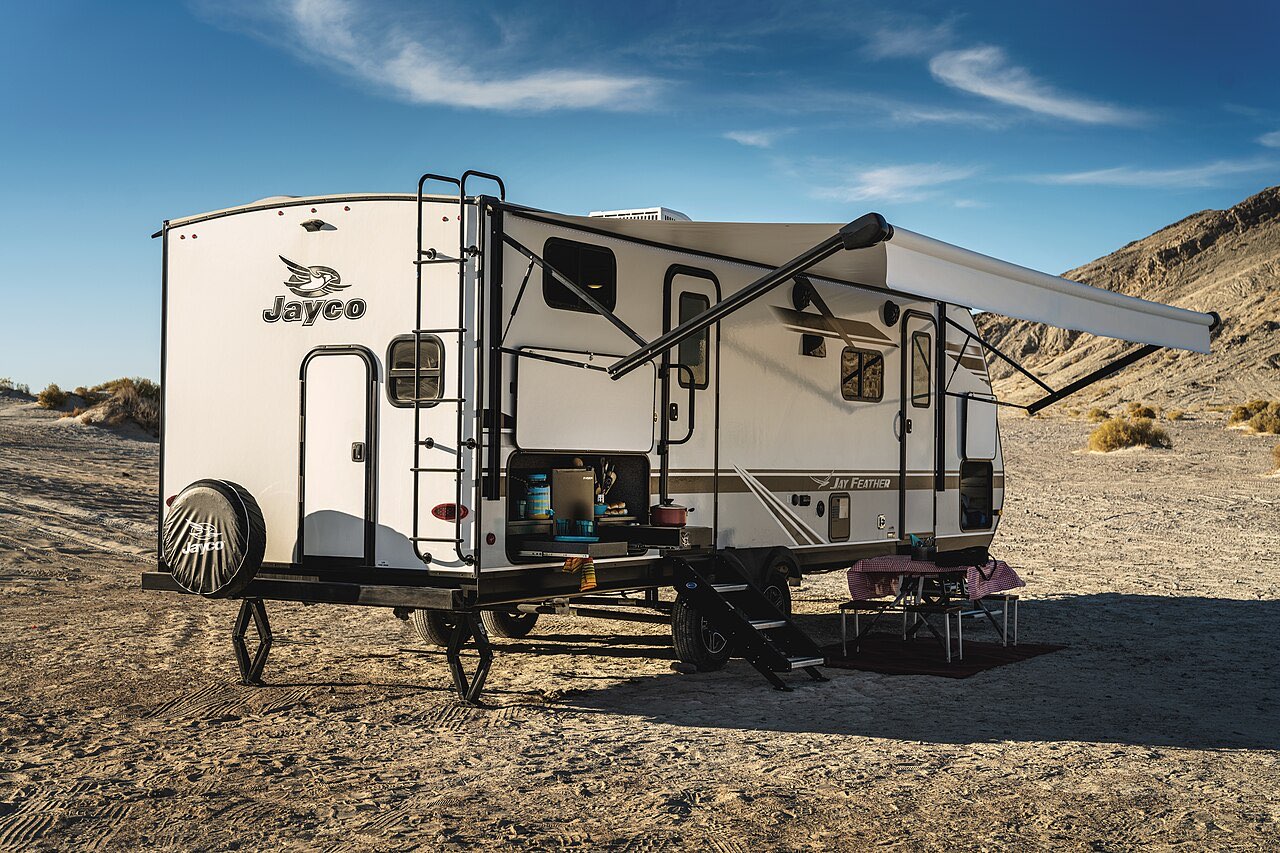
The trailer. Jayco’s 2026 Jay Flight SLX 260BH, a 29’5” bunkhouse: UVW 4,745 lb, dry hitch weight 540 lb, cargo carrying capacity 1,755 lb, GVWR 6,500 lb. Assume it is loaded to 6,000 lb for a trip and tongue weight settles at 12 percent, 720 lb.
| Payload item | Pounds |
|---|---|
| Tongue weight (12% of 6,000 lb) | 720 |
| Weight-distribution hitch | 90 |
| Two adults | 350 |
| Two children | 150 |
| Dog, crate | 70 |
| Cooler, firewood, chairs, tools in the bed | 200 |
| Generator or second cooler | 80 |
| Total | 1,660 |
Towing capacity used: 6,000 of 11,000 lb, 55 percent. Payload used: 1,660 of 1,650 lb, 101 percent. The truck is overloaded, with a relatively light trailer, and nothing on the dashboard will tell you. This is the pattern behind almost every “my truck is rated for it but it feels awful” story.
The same truck with a 33’11” Imagine 2970RL (hitch weight 809 lb dry, 7,880 lb UVW, likely 950 lb or more loaded) is over payload with just the hitch and two adults. Whether a half-ton can do a 30-foot trailer at all is a separate question with a longer answer, covered in can a half-ton tow a 30 ft travel trailer.

Fifth wheels make the problem bigger
A fifth wheel carries a larger share of its weight on the pin, commonly quoted by hitch makers at 15 to 25 percent of loaded trailer weight. A 12,000 lb fifth wheel can put 2,400 lb in the bed before the hitch itself (another 150 to 250 lb) and the passengers. That exceeds every half-ton payload sticker in production, which is why the fifth-wheel market belongs to three-quarter and one-ton trucks regardless of what the tow rating says. If you are choosing between trailer types, the travel trailer vs fifth wheel vs Class C comparison goes through the truck implications of each.
What a weight-distribution hitch does and does not do
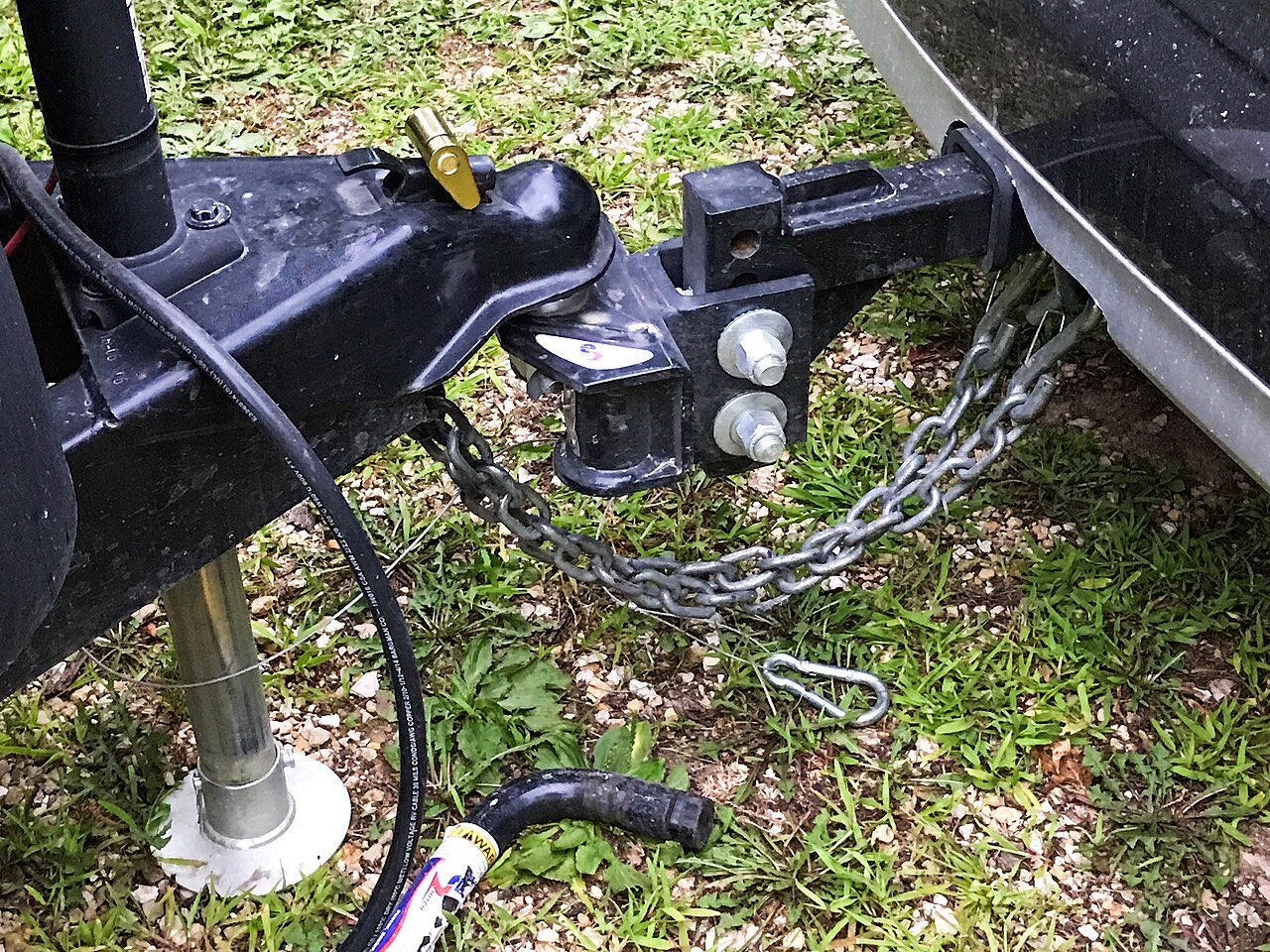
Equal-i-zer describes the mechanism plainly: spring bars use the tongue load to push weight back onto the truck’s front axle and the trailer’s axles, restoring steering and headlight aim and reducing the “teeter-totter effect over your rear axle.” That is valuable, and many manufacturers require a weight-distributing hitch above a given trailer weight (Ford’s conventional-towing guides have historically set that line at 5,000 lb; confirm the current requirement in your own guide).
What it does not do is remove the tongue weight from the truck. The combination still weighs the same, the truck still carries the tongue, and the hitch hardware adds its own weight. GVWR and payload are unchanged. Anyone who tells you a weight-distribution hitch “adds capacity” is describing how the truck feels, not what it is carrying.
How to check your own numbers in one trip
- Read the door jamb. Write down GVWR, front and rear GAWR, and the payload figure from the Tire and Loading label.
- Find GCWR for your engine, axle ratio and drivetrain in the manufacturer’s towing guide. It is not on the door label.
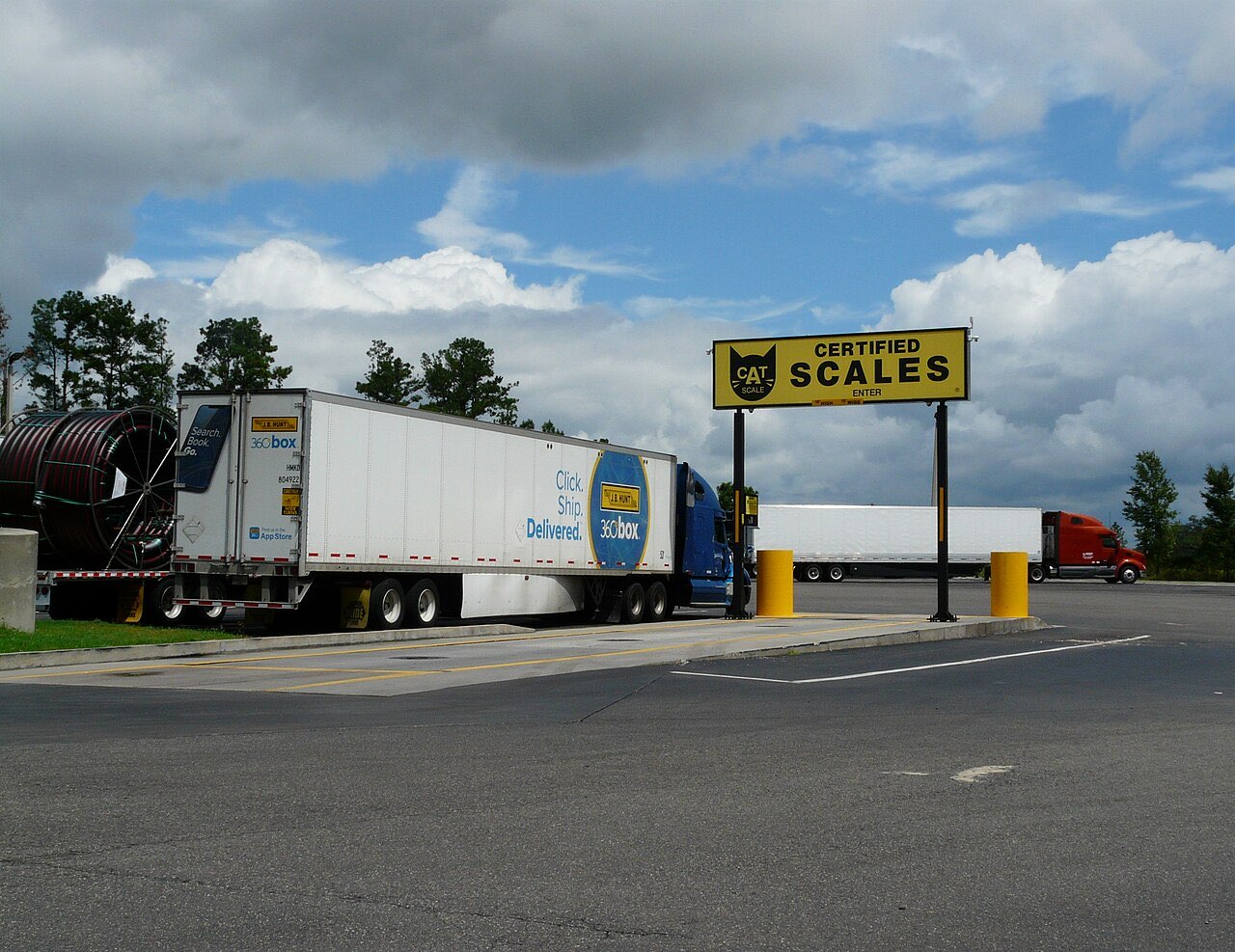
- Weigh the whole combination loaded for a trip. A CAT Scale truck-stop weigh costs $15.25 in the US as of October 2026 and gives steer, drive and trailer axle weights plus the gross; the full procedure is in how to weigh your RV at a CAT scale.
- Compare. Truck axles against GAWR, truck total against GVWR, truck total minus curb weight against payload, everything against GCWR.
If any line is over, the fix is almost always one of three: carry less in the truck, move cargo from the truck to the trailer (within the trailer’s own GVWR and its tongue-weight percentage), or change the truck. Changing the trailer rarely helps as much as people hope, because tongue weight scales with trailer weight and the people and gear stay the same.
Mistakes that put trucks over payload
- Reading the brochure instead of the sticker. The advertised maximum applies to one configuration. Yours is on the B-pillar.
- Using dry hitch weight. Loaded tongue weight is usually 100 to 300 lb higher than the brochure figure on a mid-size travel trailer.
- Forgetting the people. Passengers are payload. A family of four with a dog is commonly 500 to 600 lb.
- Forgetting the hitch and the accessories. Weight-distribution hitches, bed covers, toolboxes, steps, lift kits and aftermarket wheels all subtract from the sticker figure that was printed before they were installed.
- Confusing “it pulls fine” with “it is within ratings.” Modern turbocharged engines will accelerate an overloaded truck without complaint. Brakes, tires, axles and the frame are where the ratings live.
- Ignoring tire load ratings. P-metric tires on many half-tons are the quiet limit behind rear GAWR; the RV tire age and pressure guide covers reading a load index.
The short version
Towing capacity tells you what the drivetrain can pull under a test. Payload tells you what your specific truck can carry, and tongue weight is carried. For travel trailers behind half-ton trucks, payload runs out first, usually by a wide margin, and the only honest check is the sticker in your door and a scale ticket with the family aboard. Manufacturer definitions and figures above were read from ford.com, jayco.com, granddesignrv.com and the Code of Federal Regulations on October 28, 2026; confirm the figures for your own vehicle on its labels and in its current towing guide before you hitch up.
Frequently asked questions
What is the difference between towing capacity and payload?
Towing capacity is the maximum trailer weight the manufacturer rates the truck to pull. Payload is the maximum weight the truck itself can carry: passengers, cargo, accessories and, when you are towing, the trailer's tongue weight. Ford's own definition says payload includes 'the Tongue Weight if you are towing'. The two numbers are separate limits and you must stay under both. In practice a half-ton pickup towing a travel trailer runs out of payload first.
Where do I find my truck's real payload?
On the Tire and Loading Information label on the driver's side B-pillar, visible when the driver's door is open. Federal rule 49 CFR 571.110 requires it to state 'The combined weight of occupants and cargo should never exceed' a specific number of pounds. That figure is for your exact truck as built, including factory options, and it is the one that counts, not the headline number in a brochure.
Why does payload run out before towing capacity?
Because tongue weight comes out of payload, and a travel trailer's tongue weight is typically 10 to 15 percent of its loaded weight. A 7,500 lb loaded trailer puts roughly 750 to 1,125 lb on the hitch. Add two adults, children, a dog, a cooler, firewood, a weight-distribution hitch and a bed full of gear, and a crew-cab half-ton with a 1,600 lb sticker is over its payload while still thousands of pounds under its tow rating.
Does a weight-distribution hitch increase my payload?
No. It redistributes the load across the truck's front axle and the trailer's axles so the truck sits level and steers properly, but the tongue weight is still carried by the truck and still counts against payload and GVWR. The hitch itself, often 80 to 100 lb, is additional payload.
What is GCWR and does it matter for a travel trailer?
Gross Combined Weight Rating is the maximum allowed weight of the loaded truck plus the loaded trailer together. Manufacturers derive the advertised towing capacity from GCWR minus the truck's base curb weight, which is why real-world towing capacity falls as soon as you add people and cargo. For most half-ton and travel-trailer pairings GCWR is not the first limit you hit, payload is, but you should check all of them.
Are tow ratings standardized between brands?
Since the 2015 model year the major US pickup makers rate light-duty trucks to SAE J2807, a common test procedure covering acceleration, grade launches and a hot-weather climb. Toyota adopted it first. The standard makes brand-to-brand tow ratings more comparable, but it does nothing to change the payload sticker on your specific truck.
Keep planning
- Can a Half-Ton Truck Tow a 30 ft Travel Trailer?
Can a half-ton truck tow a 30 ft travel trailer? Sometimes. The payload math with real 2026 trailer specs and F-150 figures, plus how to check your own truck.
Updated Oct 2026 - How to Weigh Your RV at a CAT Scale
How to weigh your RV at a CAT scale: the 2026 price, the Weigh My Truck app, where each axle goes, how to read the ticket, and tongue weight from a reweigh.
Updated Oct 2026 - Tongue Weight Explained With Worked Examples
Tongue weight explained: the 10 to 15 percent rule, three ways to measure it, worked examples from real spec sheets, and what a weight-distribution hitch changes.
Updated Oct 2026