First-Year RV Ownership Costs You Don't See at the Dealer
In this guide
- The first-year cost table
- Sales tax: the state decides, not the dealer
- Title, registration and the fees stacked on top
- Insurance: trailers are cheap, motorhomes are not
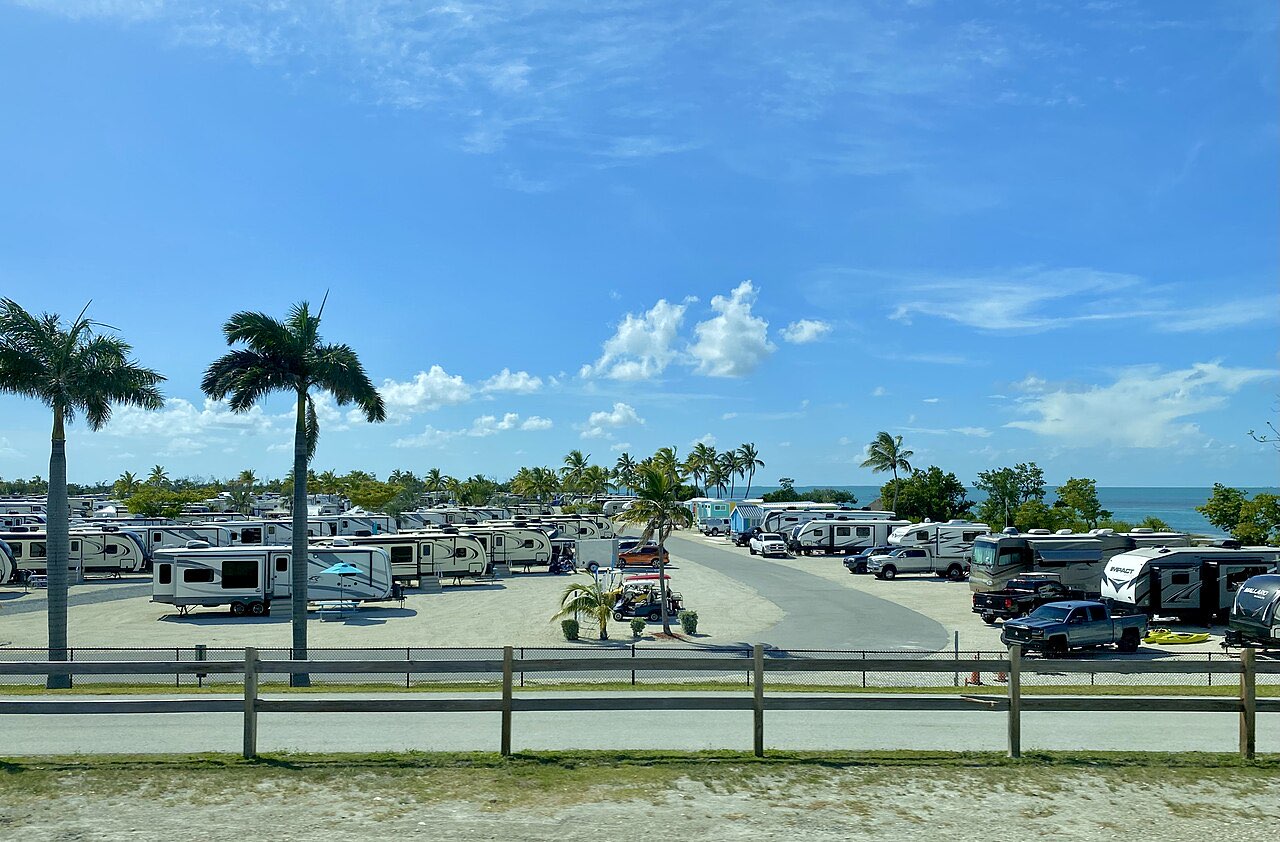
- Storage: the cost that depends on your driveway
- Hitch and setup gear: the box of things the dealer sells you at pickup
- Extended warranties and service contracts
- Depreciation: the quiet biggest number
- Tires: new does not mean young
- Fuel, campsites and the costs that scale with use
- Two worked first-year budgets
- Mistakes to avoid in year one
The number on the dealer’s window is not what the first year costs. Before the trailer or motorhome has slept anyone, you will pay sales tax, title and registration, a first insurance premium, hitch and setup gear, probably storage, and you will absorb the drop from new price to used value. For a $40,000 travel trailer kept in storage, a realistic first-year total outside the purchase price is roughly $4,000 to $9,000; for a $150,000 Class C it is often $10,000 to $25,000. The spread is mostly three items: which state you register in, whether you can park it at home, and how much the unit depreciates.
This guide walks through each line with the official figure where one exists, from state revenue and DMV pages, Progressive’s published premium averages, J.D. Power’s used-value reporting, Goodyear’s tire service bulletin and the FTC’s consumer guidance, all as read in October 2026. Where no official number exists, we say so and give a range to check locally. If you have not yet chosen between a trailer and a motorhome, our travel trailer vs fifth wheel vs Class C comparison covers the purchase decision; this page covers what comes after it.
The first-year cost table
| Line item | Travel trailer ($40,000) | Class C motorhome ($150,000) | Source quality |
|---|---|---|---|
| Sales tax | $0 (OR) to ~$2,500 (TX at 6.25%) | $0 to ~$9,400 | Official, varies by state |
| Title and registration | ~$45 to $300 | ~$80 to $500+ | Official, varies by state |
| Insurance (year one) | ~$600 average | ~$1,050 average | Progressive 2024 average |
| Storage (12 months) | $0 at home; $600 to $3,000 in a lot | $0 at home; $900 to $5,000+ | Unofficial ranges |
| Hitch, brake controller, mirrors | $500 to $1,500 | $0 (not towing) | Typical retail |
| Setup gear (hoses, cords, surge protector, levelers, chocks) | $400 to $1,200 | $400 to $1,200 | Typical retail |
| Extended service contract (optional) | $0 to $3,000+ | $0 to $6,000+ | Dealer-quoted, negotiable |
| Depreciation (new to used, year one) | Model-specific; check J.D. Power | Model-specific; often the largest line | J.D. Power values |
Depreciation is deliberately left without a flat percentage. The honest way to size it is to look up a one-year-old example of the exact model on the J.D. Power RV values tool and subtract that from what you are paying. For most buyers it is the biggest number on the page.
Sales tax: the state decides, not the dealer
Sales or use tax is charged where the RV is registered, which is normally your home state, even if you buy across a border. Three official examples show how wide the range is:
- Texas charges motor vehicle sales tax at 6.25 percent of the sales price minus any trade-in allowance, per the Texas Comptroller. On a private-party used purchase the tax is calculated on a Standard Presumptive Value rather than what you actually paid, and the buyer must remit it within 30 calendar days.
- Florida charges 6 percent state sales tax plus a county discretionary surtax, and the Florida Department of Revenue notes the surtax applies only to the first $5,000 of a motor vehicle purchase, at the rate for the buyer’s home county.
- Oregon has, in the Department of Revenue’s words, no general sales or use tax. It does apply a vehicle use tax to new vehicles bought outside the state and brought in for titling.
On a $40,000 trailer, that is $0 in Oregon and $2,500 in Texas before any local fees. Buying out of state does not avoid your home state’s tax; registering it in a state where you do not live can be fraud. Budget the rate from your own state’s revenue page.
Title, registration and the fees stacked on top
Registration is small for trailers and larger for motorhomes, but the first-year version is usually the most expensive because of one-time title and initial-registration fees.
| State (official page) | Trailer / travel trailer | Motorhome | One-time extras |
|---|---|---|---|
| Texas (TxDMV) | $45 base for trailers up to 6,000 lb | $50.75 base for cars and light trucks (motorhome fees by weight) | Local fee $0 to $31.50 by county; title fee separate |
| Florida (FLHSMV) | Camping trailer $13.50; fifth wheel $27.00 (base tax) | Under 4,500 lb $27.00; over 4,500 lb $47.50 (base tax) | Initial registration fee $225 may apply; title $77.25 new / $85.25 used |
Both pages add that “other statutory fees apply,” so the sticker-to-plate total is typically higher than the base line suggests. Heavier trailers in Texas fall on a separate fee chart not quoted here. A reasonable budget is $100 to $300 for a trailer and $150 to $500 for a motorhome in year one, then less on renewal.
Insurance: trailers are cheap, motorhomes are not
Progressive publishes a countrywide average for a 12-month RV policy, last updated November 2024: $594 for a travel trailer and $1,052 for a motorhome. The gap exists because a motorhome policy is also an auto policy, carrying liability and collision for a vehicle you drive, while a trailer’s liability on the road is largely covered by the tow vehicle’s policy.
What moves your quote away from the average, in the insurer’s own list: the type, age and condition of the RV; whether you live in it full-time or how many days a year you use it; your state, region and ZIP code; the coverage you select, including the physical-damage coverage a lender will require; and your driving experience, record and claims history. Two things first-year owners miss:
- Lender requirements. If you finance, expect to carry comprehensive and collision on the RV itself for the life of the loan. That is where most of the premium sits.
- Full-timer status. Living aboard full-time moves you into a different product with liability closer to a homeowner’s policy. Declaring recreational use when you are actually full-timing can void a claim.
Our RV insurance coverage guide breaks down the optional coverages worth having, such as total-loss replacement in the first few model years.
Storage: the cost that depends on your driveway
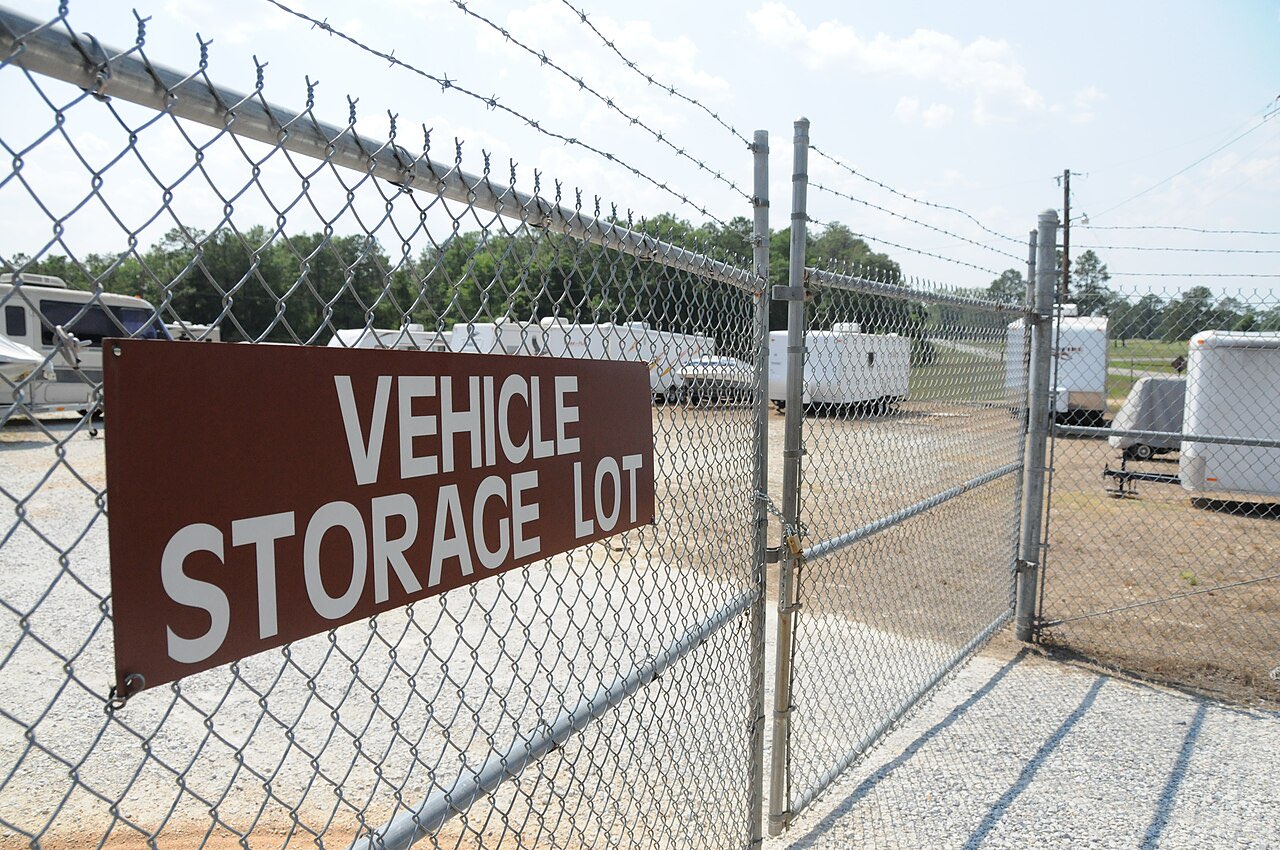
If you can park at home, this line is zero. If you cannot, it is the most consistently underestimated first-year expense, and there is no official national price survey to cite. From operator listings and aggregator pages checked in October 2026, typical monthly rates are:
| Storage type | Typical monthly range | 12-month cost |
|---|---|---|
| Uncovered outdoor lot | $50 to $150 | $600 to $1,800 |
| Covered (roof, open sides) | $75 to $250 | $900 to $3,000 |
| Indoor / enclosed | $150 to $450+ | $1,800 to $5,400+ |
Prices scale with length, so a 40-foot fifth wheel pays the top of each band and a 20-foot trailer the bottom. Before you buy, also check your HOA covenants and municipal code: many subdivisions prohibit RVs in driveways outright, which turns storage from optional to mandatory. Our RV storage cost guide covers how to compare facilities, including whether 24-hour access and electrical hookups for a battery maintainer are included.
Hitch and setup gear: the box of things the dealer sells you at pickup
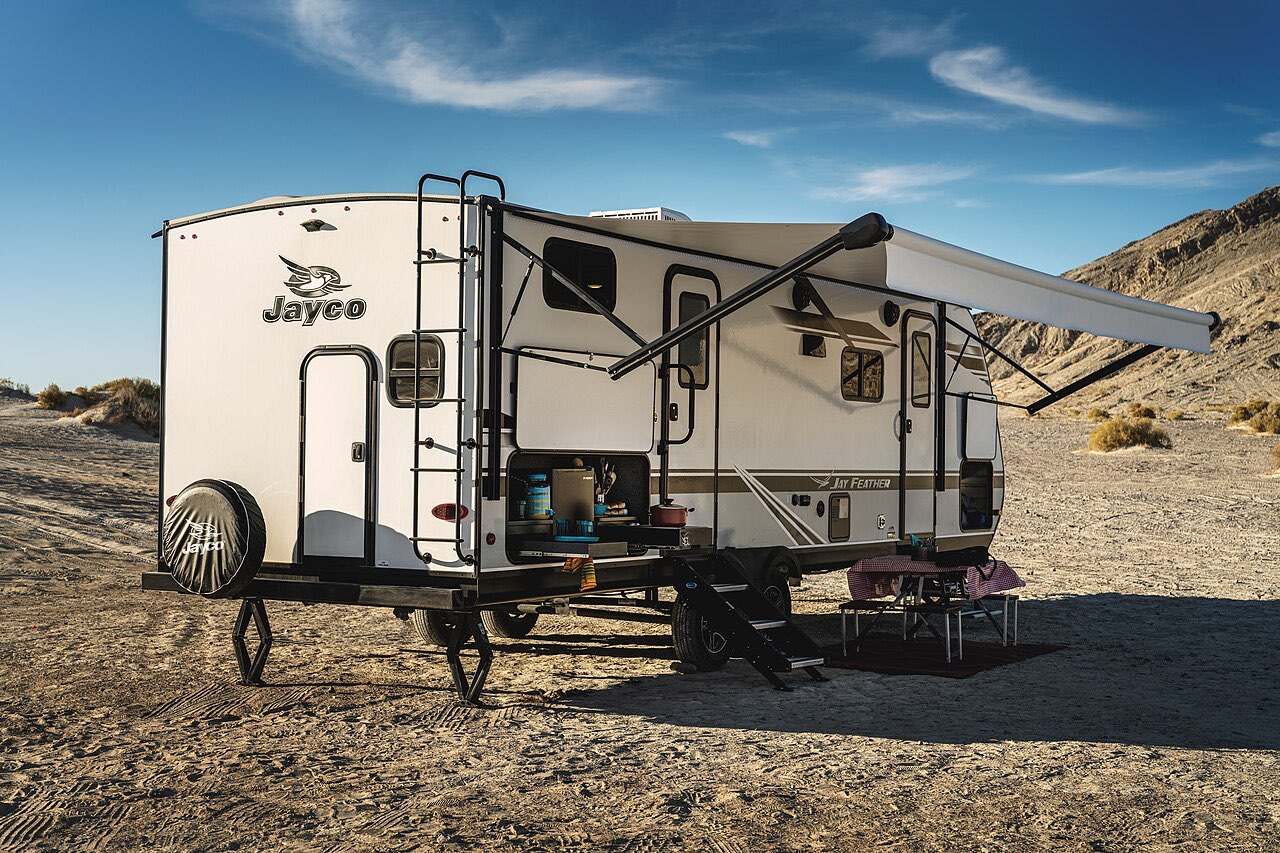
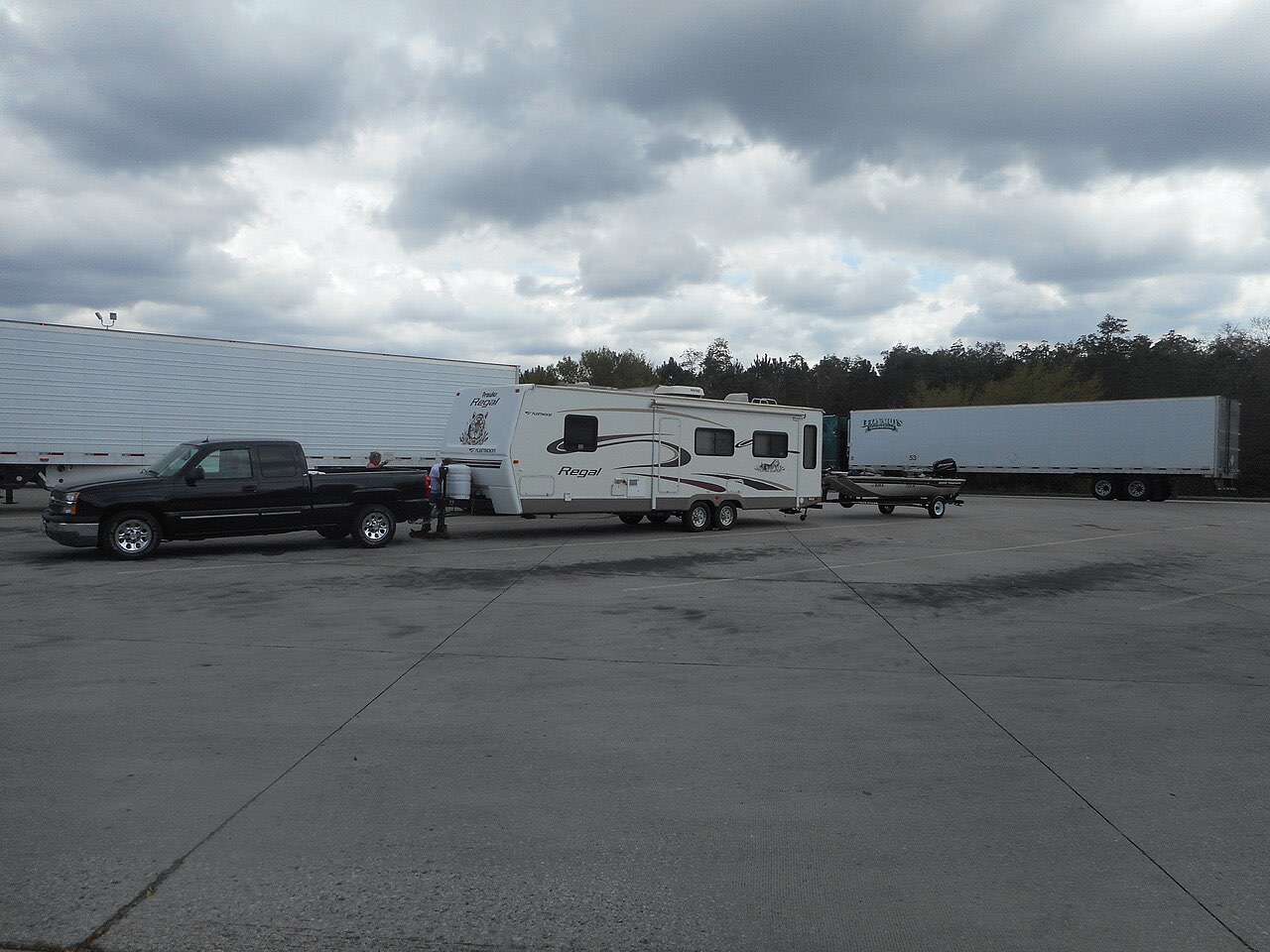
A new travel trailer does not come with the equipment needed to tow it. For a conventional trailer much above 5,000 pounds you will want a weight-distribution hitch with sway control, a brake controller if the truck lacks an integrated one, and towing mirrors. Together these typically run $500 to $1,500 installed, and the hitch must be matched to the trailer’s actual tongue weight. Grand Design, for instance, lists hitch weights from 672 pounds on its 26-foot Imagine 2300MK to 991 pounds on the 37-foot Imagine 3210BH on its Imagine spec page, and loaded tongue weight is higher still. Our towing capacity vs payload explainer shows why the tongue weight, not the trailer’s dry weight, is what usually runs a half-ton truck out of capacity.
Every RV type then needs the basic kit, roughly $400 to $1,200 depending on quality:
- Drinking-water hose and pressure regulator, water filter
- Sewer hose kit with a clear elbow and support cradle, disposable gloves
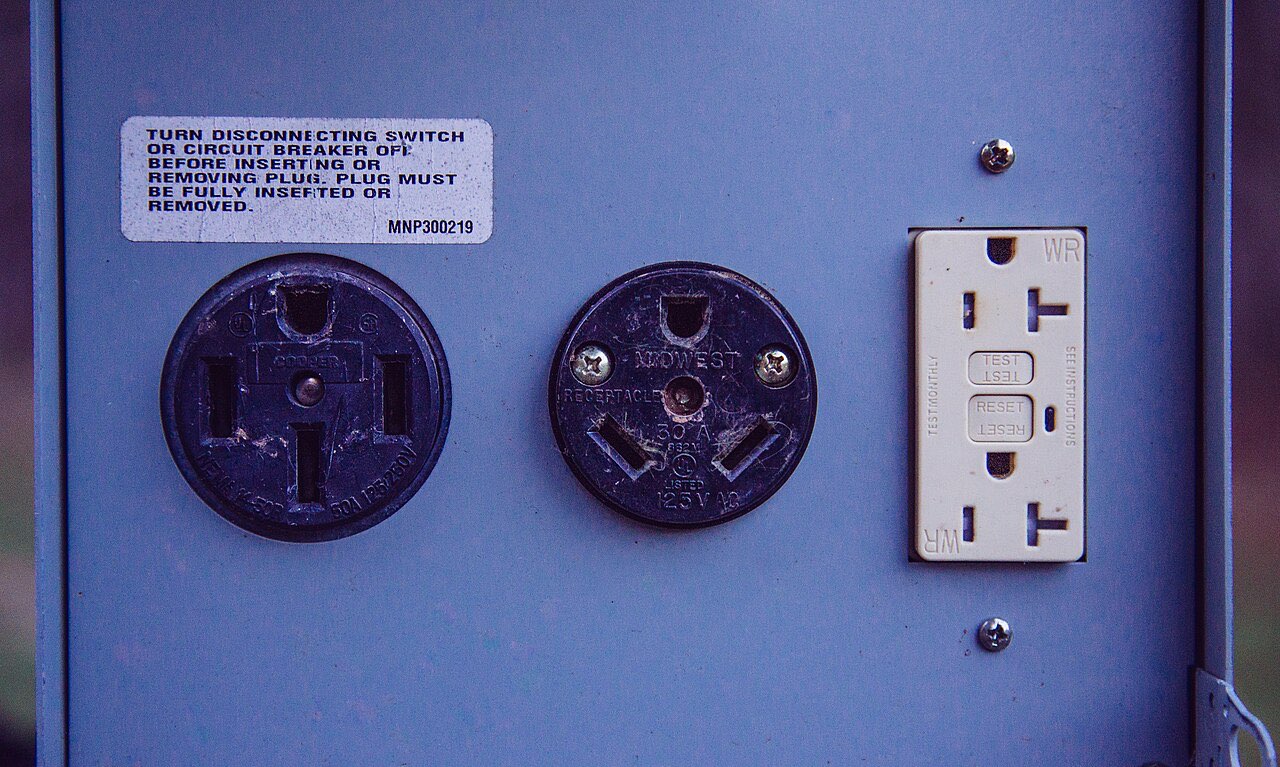
- Shore-power cord adapters and a surge protector or EMS, the one item not to skip on a 50 amp rig (see our 30 amp vs 50 amp guide)
- Leveling blocks, wheel chocks, a bubble level or app
- Tire pressure gauge rated above 100 psi, a torque wrench for lug nuts
- Fire extinguisher check, CO and propane detector check (usually fitted, confirm dates)
Dealers package much of this as a “starter kit” at a markup; the same items bought separately are usually cheaper.
Extended warranties and service contracts
What the dealer calls an extended warranty is, in the FTC’s description, a service contract that costs extra and may cover different things than the manufacturer’s warranty. The FTC’s own tests apply directly to RVs:
- Who is responsible for paying claims? The value is only as good as that company, which is often not the manufacturer or the dealer.
- What is excluded? The FTC’s line is blunt: if it is not listed in the contract, assume it is not covered. Slide mechanisms, seals, awnings and appliances are the parts that fail and are often excluded or capped.
- Does it overlap? A contract is not a good value if it does not offer more coverage than the warranty you already have, and a new RV already carries one.
- What are the true costs? Deductibles, per-visit fees and reimbursement limits, divided over the contract length.
The FTC also suggests the alternative: putting the same money in a savings account for future repairs. Contract prices at the finance desk commonly run into the thousands and are negotiable; you can also usually buy one later, before the factory warranty ends, with no penalty. If you are buying used, our used RV inspection checklist is a better first dollar than a contract.
Depreciation: the quiet biggest number
No official body publishes a first-year depreciation percentage for RVs, and we will not invent one. What J.D. Power does publish is used-value data. Its second-quarter 2026 report, as covered by RV News in August 2026, put the average used travel trailer at $27,164, essentially unchanged from $27,100 a year earlier, while used Type C motorhome values were down about 10 percent year over year and Type A values down just over 4 percent. Camping trailers averaged $12,309.
Two practical conclusions:
- Motorized units are carrying more depreciation right now than towables. A Class C bought new in 2025 lost more of its value in twelve months than a comparable trailer did.
- Your first-year loss is the new-to-used gap, not a trend line. Look up the same model, one year older, on J.D. Power before you sign. If the difference is $15,000 on a $60,000 purchase, that is your real first-year cost, and it dwarfs the registration fee.
This is also the strongest argument for buying a one- or two-year-old unit, covered in our rent vs buy RV analysis, which runs the arithmetic on letting someone else take the first drop.
Tires: new does not mean young
Trailer tires are a first-year cost more often than people expect. Goodyear’s RV tire Product Service Bulletin 2022-16, dated November 2022, recommends that any RV tire in service six years or more be replaced even if it appears serviceable, and says to use the DOT date code on the sidewall when the in-service date is unknown. Three things follow for a new owner:
- Read the date code at delivery. The last four digits of the DOT code are the week and year of manufacture. A unit that sat on a lot through two selling seasons can have tires already two years old.
- Check inflation monthly, cold. Goodyear’s bulletin calls for monthly inflation inspection; trailer tires run near their maximum sidewall pressure, not the truck’s.
- Budget for an early upgrade on cheaper trailers. Many entry-level trailers ship on tires with little margin above the axle rating; owners often replace them with a higher load range within the first year or two, typically $600 to $1,200 for four.
Our RV tire age and pressure guide covers load range, date codes and a TPMS.
Fuel, campsites and the costs that scale with use
Everything above is fixed or near-fixed. The variable costs depend on how far and how often you go: fuel at towing mileage, campground fees, propane, dump fees and the maintenance that comes due by miles and seasons (wheel bearing repack, roof sealant inspection, winterizing). Those belong in a trip budget rather than an ownership budget, and our full-time RV living cost and RV fuel cost per mile guides size them. One caution: do not assume year one will be cheap on campsites. New owners tend to book full-hookup sites while they learn the systems, and those are the most expensive nights.
Two worked first-year budgets
$40,000 travel trailer, Texas registration, stored in an uncovered lot, financed: sales tax $2,500; title and registration ~$150; insurance ~$600; storage ~$1,200; hitch, controller and mirrors ~$900; setup gear ~$700; no service contract; tires fine. Roughly $6,000 before depreciation, plus whatever J.D. Power shows for the one-year-old value gap.
$150,000 Class C, Oregon registration, parked at home, paid cash: sales tax $0; title and registration ~$300; insurance ~$1,100; storage $0; no hitch; setup gear ~$700; service contract declined. Roughly $2,100 before depreciation, but with motorized values down about 10 percent year over year in the latest J.D. Power data, the depreciation line alone can be five figures.
The pattern is the point: the fixed costs are manageable and mostly knowable from official pages before you buy. The two that are not, storage and depreciation, are the ones to settle first.
Mistakes to avoid in year one
- Registering in a state you do not live in to dodge sales tax. States audit this and the penalties exceed the savings.
- Letting the dealer bundle the starter kit, hitch and service contract into the loan. You will pay interest on items you could buy cheaper separately, and a hitch sized to the brochure’s dry tongue weight is often undersized.
- Skipping the surge protector to save $300. A miswired pedestal can take out a converter, air conditioner and control boards worth far more.
- Assuming the manufacturer warranty covers a storage-lot winter. Freeze damage from an unwinterized unit is almost always excluded; see how to winterize an RV.
- Not checking HOA and city rules before delivery. Finding out the trailer cannot sit in the driveway turns a $0 line into $1,500 a year overnight.
Confirm every tax and fee figure on your own state’s revenue and DMV pages before you budget; the Texas, Florida and Oregon numbers above are as posted in October 2026 and change with legislative sessions.
Frequently asked questions
How much does sales tax add to an RV purchase?
It depends entirely on the state where you register it. Texas charges 6.25 percent of the sales price minus any trade-in, and taxes private-party sales on a Standard Presumptive Value. Florida charges 6 percent state tax plus a county surtax that applies only to the first $5,000 of the price. Oregon has no general sales tax at all. On a $40,000 trailer that is a swing of $0 to roughly $2,500 before local add-ons, so check your own state's revenue department page before you sign.
What does RV insurance cost per year?
Progressive's published countrywide average for a 12-month policy in 2024 was $594 for a travel trailer and $1,052 for a motorhome. Motorhomes cost more because the policy also covers the drivetrain and liability as a motor vehicle. Full-time use, a lender's physical-damage requirement, your ZIP code and your driving record move the number up or down.
How much does it cost to store an RV?
There is no official national survey, so treat these as typical ranges to check locally: uncovered outdoor storage usually runs about $50 to $150 a month, covered parking $75 to $250, and indoor or climate-controlled space $150 to $450 or more for a large rig. If you cannot park at home, storage alone can be $600 to $3,000 in year one.
Is an RV extended warranty worth it?
The FTC's guidance is that a service contract costs extra, is only as good as the company responsible for paying claims, and is not a good value if it does not cover more than the warranty you already have. New RVs come with a manufacturer warranty, usually one to three years on the structure, so a contract bought at delivery mostly overlaps with it. Read the exclusions: if a component is not listed, assume it is not covered.
How fast does a new RV depreciate?
There is no single official percentage. J.D. Power's used-value data for the second quarter of 2026 showed used travel trailers averaging $27,164, essentially flat year over year, while used Class C motorhome values fell about 10 percent. The steepest loss is the gap between new MSRP and the first used sale, which is why the honest first-year number for most buyers is the difference between what you paid and what J.D. Power lists for a one-year-old example of the same model.
Do new RV tires need replacing in the first year?
Usually not, but check the date code on the sidewall. Goodyear's RV tire service bulletin recommends replacing any RV tire that has been in service six years or more regardless of appearance, and the clock starts at manufacture, not purchase. A new unit that sat on a lot for two seasons may already be a third of the way through that window, and trailers often ship on entry-level tires that owners upgrade early.
Keep planning
- Full-Time RV Living Cost: Monthly Budget by Travel Style
Full-time RV living cost in three monthly budgets, frugal to comfortable, built from official 2026 prices: park and BLM fees, EIA fuel, insurance, Starlink.
Updated Oct 2026 - 30 Amp vs 50 Amp RV Hookups Explained
30 amp vs 50 amp RV service explained: 3,600 vs 12,000 watts, what runs at once, dogbone adapters, pedestal testing and the voltage limits an EMS enforces.
Updated Oct 2026 - Boondocking for Beginners: Rules, Water and Power
Boondocking for beginners: BLM and Forest Service dispersed camping rules, 14-day limits, Motor Vehicle Use Maps, Leave No Trace, water and power budgets.
Updated Oct 2026