Holiday RV Trips: Thanksgiving and Christmas on the Road

In this guide
A holiday RV trip works best when you go south or low, book as soon as the window opens, and plan the drive around winter weather instead of the calendar. The desert Southwest, the Gulf Coast and Florida are in their camping season at Thanksgiving and Christmas, while many northern and mountain campgrounds are closed or have their water off. The three things that catch people out are full campgrounds on holiday weeks, mountain passes under chain control, and running out of propane on the first cold night.
This guide covers where to go, booking, the drive, staying warm, holiday meals in a small kitchen, and decorations. Figures come from Recreation.gov campground listings, Caltrans chain control rules, the EIA’s energy conversion table and a Jayco owner’s manual, read in October 2026. Seasons and rules change; check each official page before you go.
Where to go: follow the open campgrounds
In late November and December, think in terms of which campgrounds are fully open, not just which ones accept bookings.
| Region | What to expect in holiday season | Watch for |
|---|---|---|
| Desert Southwest (southern California, Arizona, southern Nevada, west Texas) | Peak season; mild days, cold nights | Freezing nights; full campgrounds on holiday weeks |
| Gulf Coast and Florida | Peak or near-peak; warmest option | Highest demand and prices; book early |
| Mid-latitude state parks | Many open with reduced services | Water shut off at sites; dump station closed |
| Mountains and the north | Many campgrounds closed; deep cold | Freezing plumbing, snow, chain controls |
Some federal examples from Recreation.gov’s own listings, as of October 2026:
- Furnace Creek Campground, Death Valley: 136 sites with drinking water, flush toilets and a dump station, plus a set of full-hookup pull-through sites. Its reservation season runs October 15 to April 15, and it is the only NPS campground in the park that takes reservations; the others are first-come, first-served.
- Jumbo Rocks, Joshua Tree: one of four campgrounds in the park that require reservations year-round.
- Chisos Basin, Big Bend: reservable year-round, some sites six months ahead and some two weeks ahead, at 5,400 feet. Recreation.gov notes its sites suit tents better than large rigs, so check site lengths before planning a trailer stay there.
For park-by-park RV fit, our sister site’s Death Valley RV guide covers sites and lengths. If your plan involves state parks in several states, the state park annual passes guide shows which passes pay for themselves.
Booking: the window opens months ahead
Holiday weeks are among the first dates to fill at popular parks. California State Parks moved to a rolling six-month window in 2017 and described it as similar to the National Park Service’s booking window. On a six-month window, a Thanksgiving-week site opens in late May and a Christmas-week site in late June. Some federal campgrounds use different windows, and Chisos Basin shows that a single campground can have more than one; read the booking rules on each campground’s page.
Practical tactics:
- Set reminders for the exact opening date and time for your first-choice campground.
- Book arrival a day or two before the holiday. Travel days on the Wednesday before Thanksgiving and around Christmas Eve are busy on the road and at check-in.
- Have a backup: a second campground, a private park, or a membership option. Our campground apps guide covers tools that show availability and cancellations.
- Read the cancellation rules before booking two places “just in case.”
The drive: weather beats the calendar
A holiday trip has a fixed date, and winter weather does not care. Plan the route so that you can wait a day without losing the trip.
Chain controls. Mountain highways in the West go to chain control quickly. California’s rules are a good example of how trailers are treated differently from cars. Under its lowest level, R-1, chains are required on all vehicles except passenger vehicles and light trucks under 6,000 lb with snow tires on at least two drive wheels, and all vehicles towing trailers must have chains on one drive axle; trailers with brakes must have chains on at least one axle. At R-2, chains or traction devices are required on all vehicles except four-wheel or all-wheel drive with snow-tread tires on all four wheels. At R-3, there are no exceptions, and Caltrans says a highway will often be closed before R-3 is imposed. The speed limit with chains on is 25 or 30 mph. Other states have their own rules; check each state DOT’s road-conditions site the morning you drive.

The simplest winter rule for towing is to avoid the problem: choose routes that stay low, leave a weather day in the plan, and do not tow over a pass in a storm to make a dinner reservation. If you must cross, our mountain driving guide covers grades and brakes, and the travel-day checklist covers the walk-around. Short winter days matter too: plan to arrive with daylight left to back in and hook up.
Staying warm: the propane math
Heat is where a holiday trip differs most from a summer one, and on most RVs heat means propane. Jayco’s owner’s manual lists typical appliance use, and the furnace dwarfs everything else:
| Appliance (Jayco manual) | Propane use, BTU per hour |
|---|---|
| Furnace | 35,000 to 40,000 |
| Water heater | 8,800 |
| Range burner | 6,500 to 9,000 |
| Refrigerator on propane | 1,200 to 1,500 |
The EIA puts propane at 91,452 BTU per gallon. So a 35,000 BTU furnace running continuously burns about a gallon every 2.6 hours. A standard 20-lb cylinder holds roughly 4.7 gallons, or about 430,000 BTU, which works out to around 12 hours of continuous furnace burner time. The furnace cycles on and off, so real use is lower, but a run of nights near freezing can empty a 20-lb cylinder in a weekend. Our propane basics guide covers cylinder types, refilling and leak checks.

Ways to stretch it:
- Leave with every cylinder full and know where to refill along the route. Holiday hours at propane dealers are short.
- Use electric heat on hookups for mild nights, within your pedestal’s amperage and the campground’s rules. Our 30 vs 50 amp guide shows what a space heater uses of your service.
- Close blinds and use window insulation at night; skirting helps on longer stays.
- Do not use the range or oven for heat. Jayco’s manual says cooking appliances are not to be used for comfort heating.
- Test the carbon monoxide and propane detectors before the trip.
Water and freezing. If nights will drop below freezing, protect the hose and the tanks. A heated drinking-water hose keeps the fresh supply flowing at a hookup site, or you can fill the fresh tank and disconnect the hose overnight. The cold-weather camping guide covers what freezes first, and if the trip ends the season, the winterizing guide covers putting the rig away.
Holiday meals in an RV kitchen
An RV oven is small and uneven, and the fridge is small. Plan the meal to the kitchen:
- Pick a smaller bird or a turkey breast, or split the job: smoke or grill outside, keep the oven for sides.
- Prep at home. Make sides and desserts ahead, freeze them flat, and let them double as fridge cold packs on the drive.
- Mind the propane: a long oven roast on a cold day stacks on top of the furnace. Factor it into the cylinder math.
- Cook outside with care. Keep outdoor cookers off the awning’s underside, on a stable surface, and away from the trailer wall. Follow campground fire rules; some desert parks restrict fires seasonally.
- Plan dishes and gray water. Big meals fill the gray tank fast. Know where the dump station is and whether it is open in winter.
Decorations and power
Decorating the site is part of the fun of a holiday trip. A few practical limits:
- Read the label. LED string lights draw little power, but strings, inflatables and projectors vary; add up the wattage on each box.
- On hookups, stay well within your pedestal’s amperage alongside the furnace fan, fridge and any electric heater.
- Dry camping, run lights from the house battery through the inverter, or a portable power station, and turn them off at quiet hours. Our generator guide covers generator hours where those apply.
- Cords and safety: outdoor-rated cords only, kept out of standing water and off the driving path; no staples through the awning fabric; take everything down before strong wind.
- Respect neighbors and rules: quiet hours, light that shines into other sites, and anything attached to trees.
A holiday trip checklist
- Book the campground the day the window opens; save a backup.
- Confirm in writing that water, dump station and electric are on at your dates.
- Fill every propane cylinder; pack a gauge.
- Pack chains or traction devices that fit your tires if any pass is on the route.
- Check tire pressures cold; cold weather lowers them.
- Test the furnace, detectors and batteries at home.
- Plan the meal to the kitchen; prep ahead.
- Leave a weather day in the plan.
Gear that helps on this trip
As an Amazon Associate we earn from qualifying purchases.
- Kohree 15 ft heated RV drinking water hose: Keeps the fresh-water hookup flowing on freezing desert nights; the maker rates it to -40°F with a thermostat and lists NSF 372 certification for drinking water.
 $59.99Price as of November 16, 2026, 10:00 AM ET. Prices and availability are accurate as of the date/time indicated and are subject to change. Any price and availability information displayed on Amazon.com at the time of purchase will apply to the purchase of this product.
- CALPOSE propane tank gauge (QCC1 / Type 1): Shows how much is left in a cylinder before the furnace quits at 3 a.m., which matters when holiday hours make refills hard.
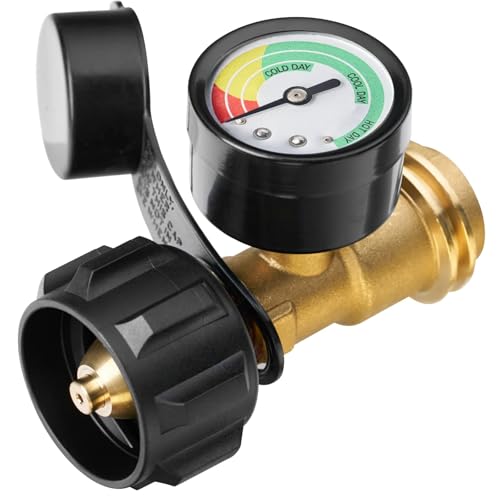 $10.99Price as of November 16, 2026, 10:00 AM ET. Prices and availability are accurate as of the date/time indicated and are subject to change. Any price and availability information displayed on Amazon.com at the time of purchase will apply to the purchase of this product.
- VTOMAN Jump 600X portable power station: Runs LED decorations, phone charging and a small appliance at a site without hookups, without starting a generator during quiet hours.
Listings and prices change; check the current listing before buying.
Campground seasons and booking rules above are from Recreation.gov and California State Parks; chain rules are from Caltrans; propane figures are from the EIA and Jayco’s manual, all read in October 2026. Seasons, services and chain rules change, so confirm them on each official page before you leave.
Frequently asked questions
Are campgrounds open at Thanksgiving and Christmas?
Many are, especially in the desert Southwest, the Gulf Coast and Florida, where late fall and winter are peak season. Death Valley's Furnace Creek Campground runs its reservation season from October 15 to April 15, for example. Many northern and mountain campgrounds close for winter or turn off water. Check each campground's own page for its season and whether water and dump stations stay open.
How far ahead should I book a holiday RV site?
As soon as the booking window opens. California State Parks and many federal campgrounds use a rolling window of about six months, so a site for the week of Thanksgiving opens in late May and Christmas week in late June. Popular desert parks fill quickly for holiday weeks; check each campground's specific window, because some differ.
How much propane will I use on a cold holiday trip?
More than in summer, almost all of it for heat. Jayco lists RV furnaces at 35,000 to 40,000 BTU per hour, and a gallon of propane holds about 91,500 BTU, so a furnace burning continuously uses roughly a gallon every two and a half hours. A 20-lb cylinder holds about 4.7 gallons. Real use depends on how often the furnace cycles; start with full cylinders and a gauge.
Do I need tire chains to tow an RV over the holidays?
If your route crosses mountain passes, carry them and know the rules. California's chain controls require vehicles towing trailers to have chains on one drive axle under its lowest chain requirement, and trailers with brakes to have chains on at least one axle. Check each state's DOT road conditions before leaving, and be ready to wait out a storm instead.
Can I run Christmas lights at an RV campsite?
Usually yes, within campground rules and quiet hours. LED string lights draw little power; check the wattage on the box and keep the total well within your hookup, inverter or power station. Do not run extension cords where they can be driven over or sit in standing water, and turn decorations off when you leave the site.
Keep planning
- RV Travel Day Checklist: Why Each Step Matters
RV travel day checklist explained: the why behind each departure and arrival phase, from slides and the breakaway cable to cold tire pressure and propane in tunnels.
Updated Oct 2026 - Black Friday RV Campground Membership and Gear Deals 2026
What to look for in RV campground memberships and outdoor gear Black Friday deals in 2026, including Thousand Trails, KOA and Harvest Hosts.
Updated Nov 2026 - Boondocking for Beginners: Rules, Water and Power
Boondocking for beginners: BLM and Forest Service dispersed camping rules, 14-day limits, Motor Vehicle Use Maps, Leave No Trace, water and power budgets.
Updated Nov 2026