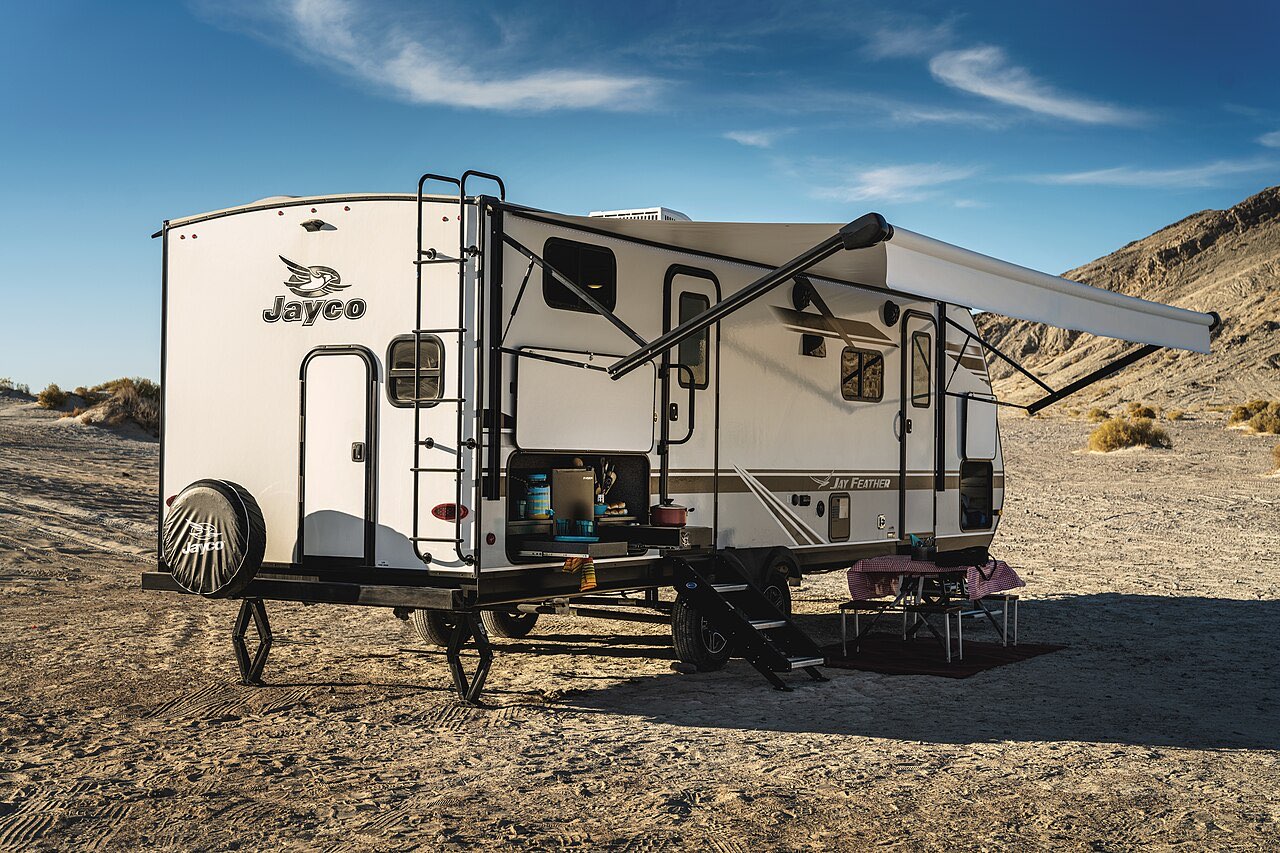
RV Wheel Chocks: Types and How to Use Them Safely
In this guide
Chock a trailer’s wheels before it comes off the hitch and take the chocks out only after it is fully hitched again; chock both sides of a tire on any slope; and treat X-type chocks between tandem tires as stabilizers that stop rocking, not as a replacement for regular chocks. That order is in the manufacturer manuals: Lippert’s leveling manual says to chock the tires before unhitching, and Jayco’s hitching steps remove the chocks only after the hitch, breakaway cable and wiring are connected.
This guide covers the chock types, placement on trailers, fifth wheels and motorhomes, where chocks fit in the unhitching and hitching sequence, and which chocks to buy. Sources are a Jayco owner’s manual, the Lippert Ground Control 3.0 owner’s manual and the chock makers’ own listings, read in October 2026. Your RV’s and tow vehicle’s manuals govern.
Why chocks matter more on a trailer
A travel trailer or fifth wheel has no parking brake of its own. When it is hitched, the tow vehicle’s brake holds it. The moment you lift the coupler off the ball or open the fifth-wheel jaws, nothing holds it except the chocks and friction. On a slight slope a trailer will roll, slowly at first, and several tons of trailer rolling into a tow vehicle, a tree or a person is the accident chocks prevent.
That is why the order is fixed:
- Arriving: park, set the tow vehicle’s parking brake, chock, then unhitch. Jayco’s manual says to set the tow vehicle parking brake and block all RV wheels with chocks once in the site; Lippert’s says to chock the tires before unhitching.
- Leaving: hitch, lock and test the hitch, attach the breakaway cable, plug in the lights, then remove the chocks. In Jayco’s fifth-wheel hitching steps, removing the chocks is step 10, after the breakaway cable and wire harness.
Our RV travel day checklist puts both sequences on one page.
The types of chock
| Type | How it works | Strengths | Limits | Best for |
|---|---|---|---|---|
| Plastic wedge (pair) | Wedge pushed against the tread | Light, cheap, stack in a bay; ropes on some make removal easy | Can slide on smooth or wet concrete; check the tire-diameter rating | Most travel trailers on campground gravel |
| Solid rubber wedge | Heavy wedge with a grippy base | Grips pavement, does not crack in sun | Heavier; bulkier to store | Motorhomes, pavement sites, larger trailers |
| X-type (scissor) between tandem tires | Expands in the gap between the two tires and pushes them apart | Stops the small rolling and rocking inside the trailer | Only works on tandem axles with a suitable gap; goes in after leveling, out before hitching | Tandem-axle trailers and fifth wheels, as a stabilizer |
| Leveler with built-in chock | Curved ramp with a wedge that locks the tire | Levels and chocks in one step | Trailers only; tire size limit | Owners who level side to side every stop |
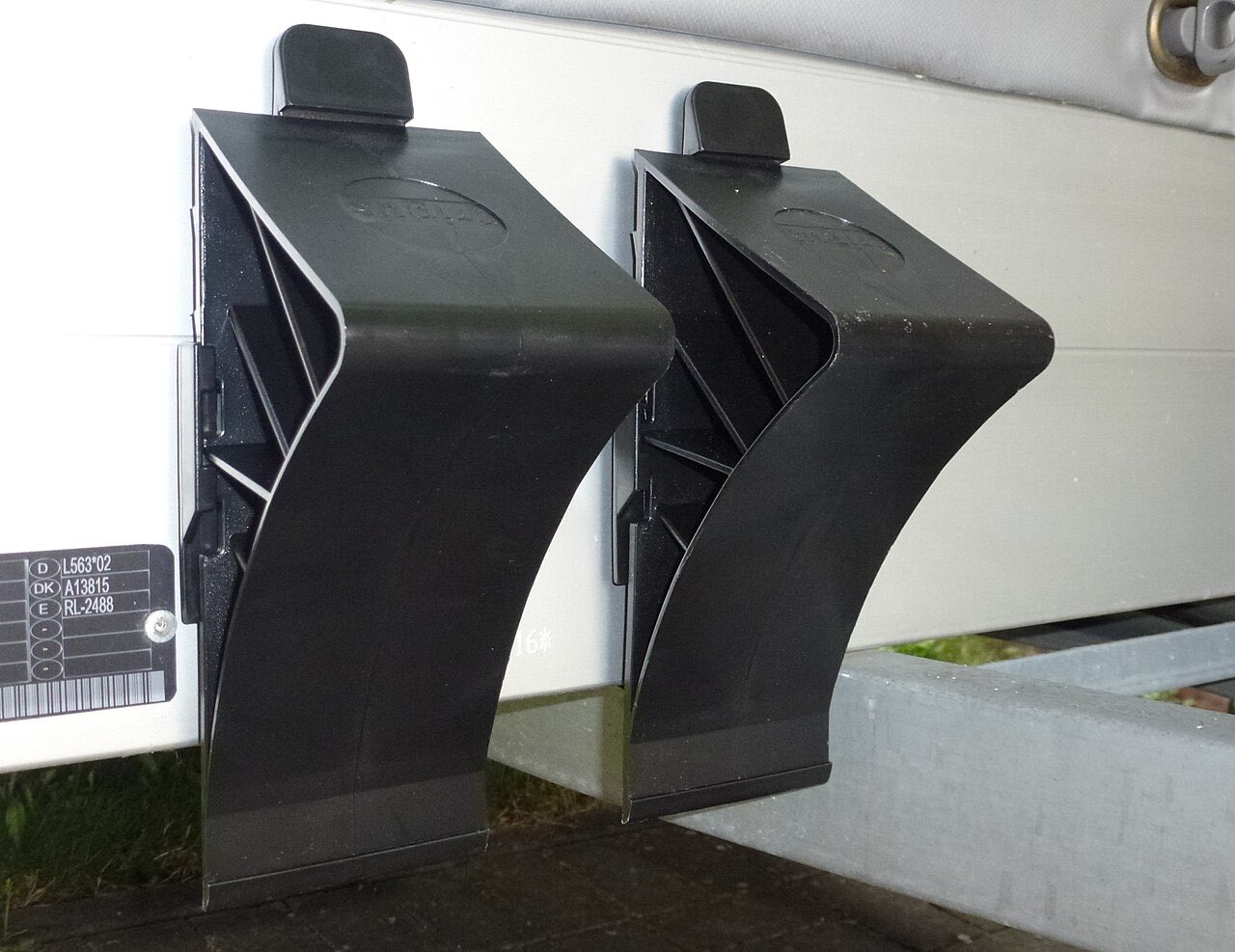
| Folding or wheel-lock chocks | Brackets that clamp around a tire | Some also deter theft | Slower to fit | Storage lots, long stays |
Placement on a travel trailer or fifth wheel
- Find the downhill direction. Even “level” sites slope a little, usually toward drainage.
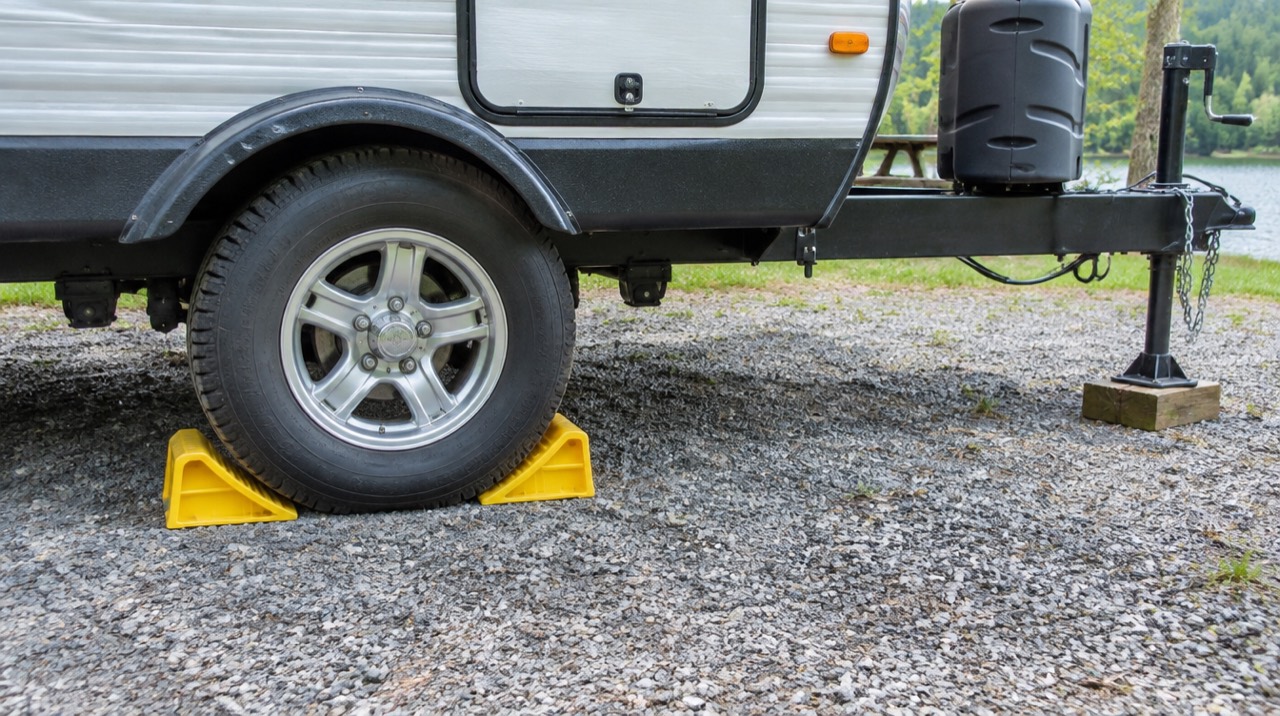
- Single axle: one chock on the downhill side of each tire, or both sides of one tire on flat ground.
- Tandem axle: chock the downhill side of one tire and the uphill side of the tire on the same axle on the other side, or put a chock in front of and behind one tire. A chock wedged into the gap between tandem tires blocks one direction, and pairs well with one on the outside.
- Push the chock in snug against the tread, square to the tire, not angled. A loose chock is a ramp.
- On blocks or levelers, chock after the tires are on the blocks, against the tire and on the block or ground in front of it. Andersen’s curved leveler includes its own chock for this reason. Our leveling blocks vs auto-leveling guide covers the leveling side.
- Then unhitch. Lower the tongue jack or landing gear onto a pad, release the coupler or jaws, and raise the front a little to see that nothing moves.
On a fifth wheel the landing gear comes down before the jaws open; Jayco’s manual says the landing gear must be fully retracted before towing. The chocks still go in first.
Placement on a motorhome
A motorhome has its own parking brake, which is the primary hold; follow the chassis maker’s manual for it. Chocks are a second layer that earns its place when:
- the site slopes noticeably,
- hydraulic leveling jacks have lifted the coach and reduced the tires’ contact with the ground,
- you are towing a car behind and connecting or disconnecting it, or
- anyone is working near the wheels.
Chock the downhill side of tires on an axle that stays on the ground after leveling. Never work under a coach supported by its leveling jacks; Lippert’s manual says to use jack stands for any service.
X-chocks: what they are for
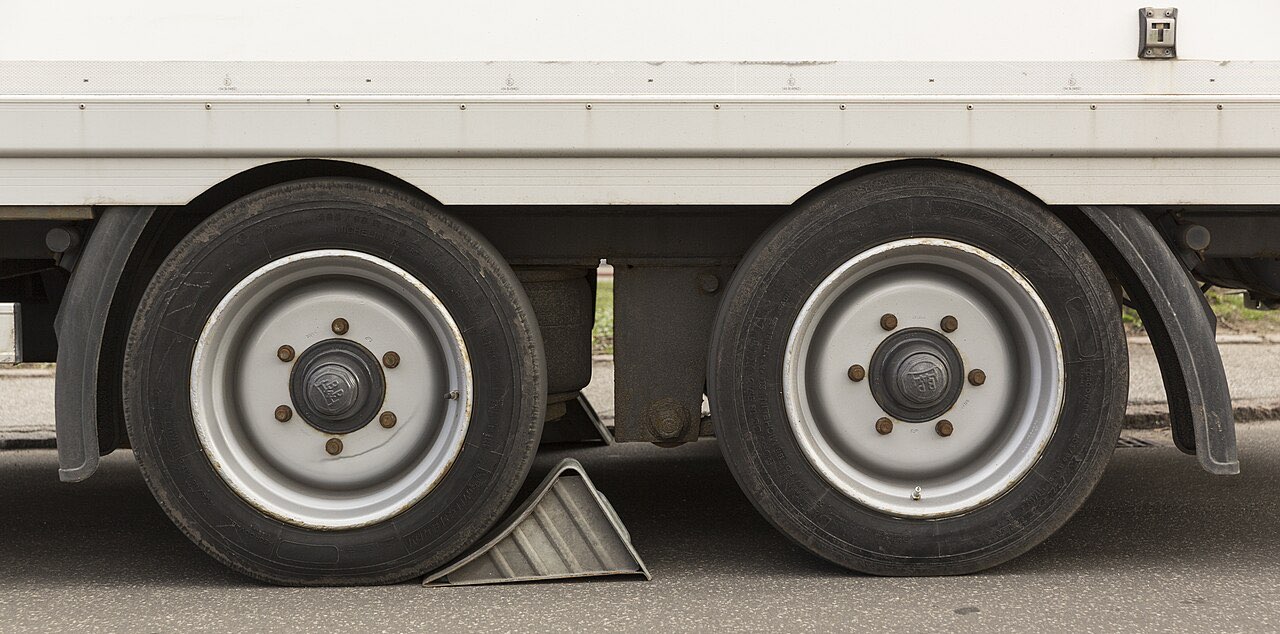
X-chocks, sometimes called tire locking chocks, sit in the gap between the two tires of a tandem axle. Turning the ratchet expands the X so the arms press outward on both treads, locking the two tires against each other. BAL, which makes the original, describes the X-Chock as providing added stabilization and preventing tire shift by applying opposing force to tandem tires.
What they fix is the small fore-and-aft roll you feel when someone walks inside a trailer on its springs. What they are not is a parking brake for an unhitched trailer on a slope: put them in after the trailer is leveled and on its regular chocks, and take them out before you start hitching. Measure the gap between your tandem tires before buying, because each model has a working range and some trailers, especially with independent suspension, have too narrow a gap. Check the range printed on the package against your tape measure.
Combined with stabilizer jacks, X-chocks take most of the movement out of a trailer. Neither replaces leveling or chocks.
Chocking on awkward ground
Campground sites are not always firm gravel. A few situations need a little more thought:
- Wet grass or mud. A chock on soft ground can be pushed into the dirt rather than holding. Put a board or a leveling block under it so it bears on something firm, and chock both sides.
- Smooth concrete or asphalt. Plastic chocks can skid on a slick surface, especially when wet. Rubber chocks grip better; so does a chock with a textured base.
- Steep sites. If a site is steep enough that the trailer wants to roll noticeably, chocks are working hard. Level as much as you can with blocks, chock both sides of a tire on each side, and consider a different site rather than relying on plastic wedges alone.
- Snow and ice. Clear down to the ground before setting chocks; a chock sitting on packed snow can slide with the trailer.
- Storage lots. For weeks or months in storage, chocks on both sides of the tires plus a wheel lock or coupler lock is the usual setup, and tire covers keep the sun off the rubber.
If you find yourself fighting a site, that is information: the trailer is telling you the ground is not right for unhitching. Moving to a flatter spot costs a few minutes; a trailer that rolls costs far more.
Inspecting and storing chocks
- Plastic cracks with sun and cold. Replace a chock with a split face or a broken rib.
- Ropes rot. A rope that snaps when you yank on a jammed chock sends you backward.
- Keep them where you can reach them first. If the chocks are under the camp chairs in the back of a bay, they will be skipped when it is getting dark.
- Count them out and count them in. A chock left at the last site is a missing chock at the next one. A bright color helps.
Mistakes to avoid
- Unhitching before chocking. The most common and most dangerous error.
- Pulling chocks before the hitch is locked and tested. Jayco removes them last.
- One chock on the uphill side only. Find the downhill side and chock it.
- Using X-chocks instead of regular chocks. They stabilize; they do not hold a trailer on a slope.
- Chocks too small for the tire. Check the maker’s diameter rating.
- Driving over a chock you forgot to remove. A walk-around before pulling out catches it. Our guide to backing a trailer has the spotter routine that also catches it.
Gear that helps with this job
A pair of regular chocks is the non-negotiable piece; X-chocks are the comfort upgrade for tandem axles.
As an Amazon Associate we earn from qualifying purchases.
- For most travel trailers: Camco RV wheel chocks with rope, 2-pack (model 44471). Camco lists them for tires up to 26 inches in diameter, in UV-inhibited plastic, with a rope so you can pull a jammed chock out without reaching under the trailer. Buy two pairs if you chock both sides of a tandem axle.
 $19.98Price as of November 16, 2026, 10:00 AM ET. Prices and availability are accurate as of the date/time indicated and are subject to change. Any price and availability information displayed on Amazon.com at the time of purchase will apply to the purchase of this product.
- For tandem-axle trailers and full-timers: the BAL 28010 X-Chock tire locking chock, one per side. It ratchets out between the tandem tires to stop the rocking described above. Check your tire gap against its working range before buying, and keep regular chocks for hitching and unhitching.

Listings and prices change; check the current listing before you buy.
Sequences above follow Jayco’s and Lippert’s manuals as read in October 2026; your RV, chassis and hitch manuals govern. For the weight side of a safe hitch-up, see our weight distribution hitch setup guide.
Frequently asked questions
When should you chock a travel trailer's wheels?
Before it comes off the hitch, every time. Lippert's Ground Control manual says to park on a level surface and chock the tires before unhitching, and Jayco's manual says to block all RV wheels with chocks once the trailer is in its site. On the way out, chocks come out last: Jayco's hitching steps remove them only after the hitch is locked, the breakaway cable is attached and the lights are plugged in.
Which side of the tire do wheel chocks go on?
Chock both sides when you can: a chock on the downhill side stops the trailer rolling away, and one on the uphill side stops it rolling back when the tongue moves during unhitching. On flat ground, chock front and back of one tire on each side, or both sides of one tire with a second pair on the other side of the trailer.
Are X-chocks a replacement for regular wheel chocks?
No. X-type chocks expand between the two tires of a tandem axle and push them apart, which takes out the rocking you feel when walking inside. BAL describes its X-Chock as providing added stabilization and preventing tire shift. They go in after leveling and come out before hitching, so you still need regular chocks for the unhitching and hitching steps.
Do motorhomes need wheel chocks?
Set the parking brake and follow the chassis manual first. Chocks are a cheap second layer, especially on a sloped site, when the leveling jacks have lifted the coach, or when someone is working near the wheels. Chock the downhill side of the tires on an axle that stays on the ground.
Are plastic wheel chocks good enough for an RV?
Plastic chocks sized for your tire work on firm, level-ish ground, which is what most campground sites are, and they are what most trailer owners carry. They can slide on smooth concrete or wet surfaces and crack with age in sun. Rubber chocks grip better on pavement and are heavier. Check the maker's tire-diameter rating against your tires either way; Camco rates its common plastic pair for tires up to 26 inches.
Keep planning
- Fifth Wheel Hitch Types: Rails, Puck, Slider, Gooseneck Adapter
Fifth wheel hitch types compared from the makers' specs: rail-mounted, OEM puck, sliders for short beds and gooseneck adapters, with real GTW and pin ratings.
Updated Oct 2026 - Flat Towing a Car Behind a Motorhome: Dinghy Basics
Flat towing a car behind a motorhome: how to check if your vehicle is flat-towable, tow bars and base plates, supplemental brake laws, and the hookup routine.
Updated Oct 2026 - Can a Half-Ton Truck Tow a 30 ft Travel Trailer?
Can a half-ton truck tow a 30 ft travel trailer? Sometimes. The payload math with real 2026 trailer specs and F-150 figures, plus how to check your own truck.
Updated Oct 2026