Full-Time RV Living Cost: Monthly Budget by Travel Style
In this guide
Full-time RV living costs between roughly $1,800 and $7,000 a month before any RV loan payment, and the number you land on is set by two choices: how fast you move and where you park. Everything else (insurance, phone, food, maintenance) is similar to the house you left. Campground fees and fuel are the lines that triple between a boondocking couple and a resort-hopping family.
This guide builds three monthly budgets from official October 2026 prices wherever an official price exists (state park and BLM fees, EIA fuel averages, KOA Rewards, Starlink and insurance figures from their own pages) and says plainly where a line is an estimate. US dollars throughout. Prices change; confirm each on the linked page before you plan around it.
The two lines that decide everything
Campground fees
Official per-night examples, read October 28, 2026:
| Where | Official price | Notes |
|---|---|---|
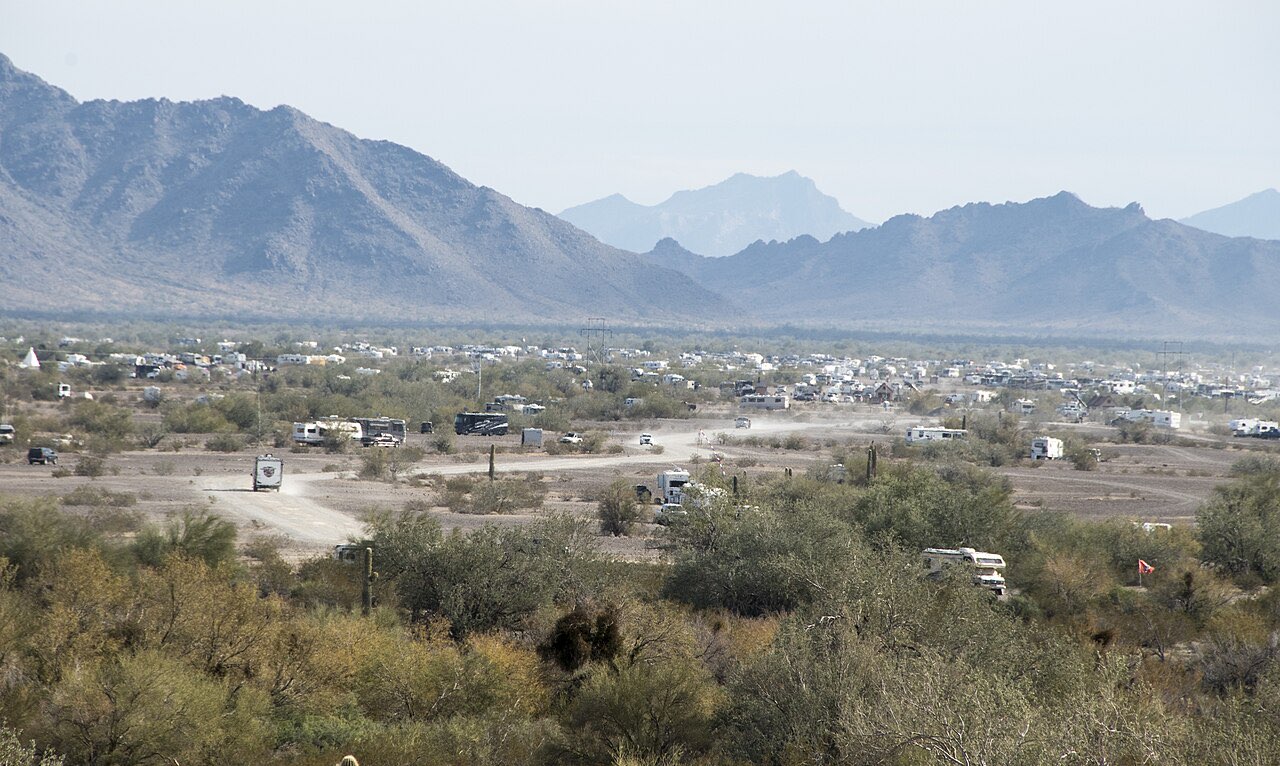
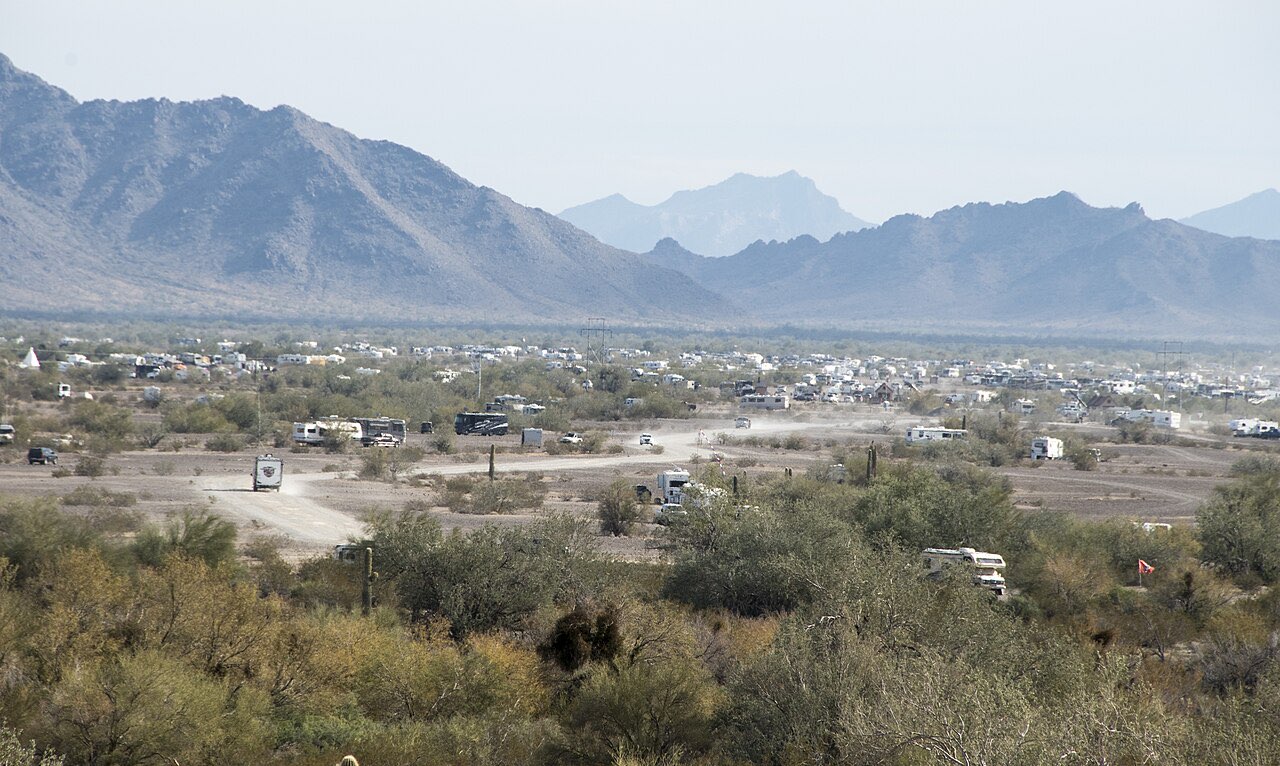
| BLM La Posa Long Term Visitor Area (Quartzsite, AZ) | $180 for the whole Sept 15 to Apr 15 season; $40 for 14 days | Dry camping with dump, water and trash; permit valid at all BLM LTVAs (BLM) |
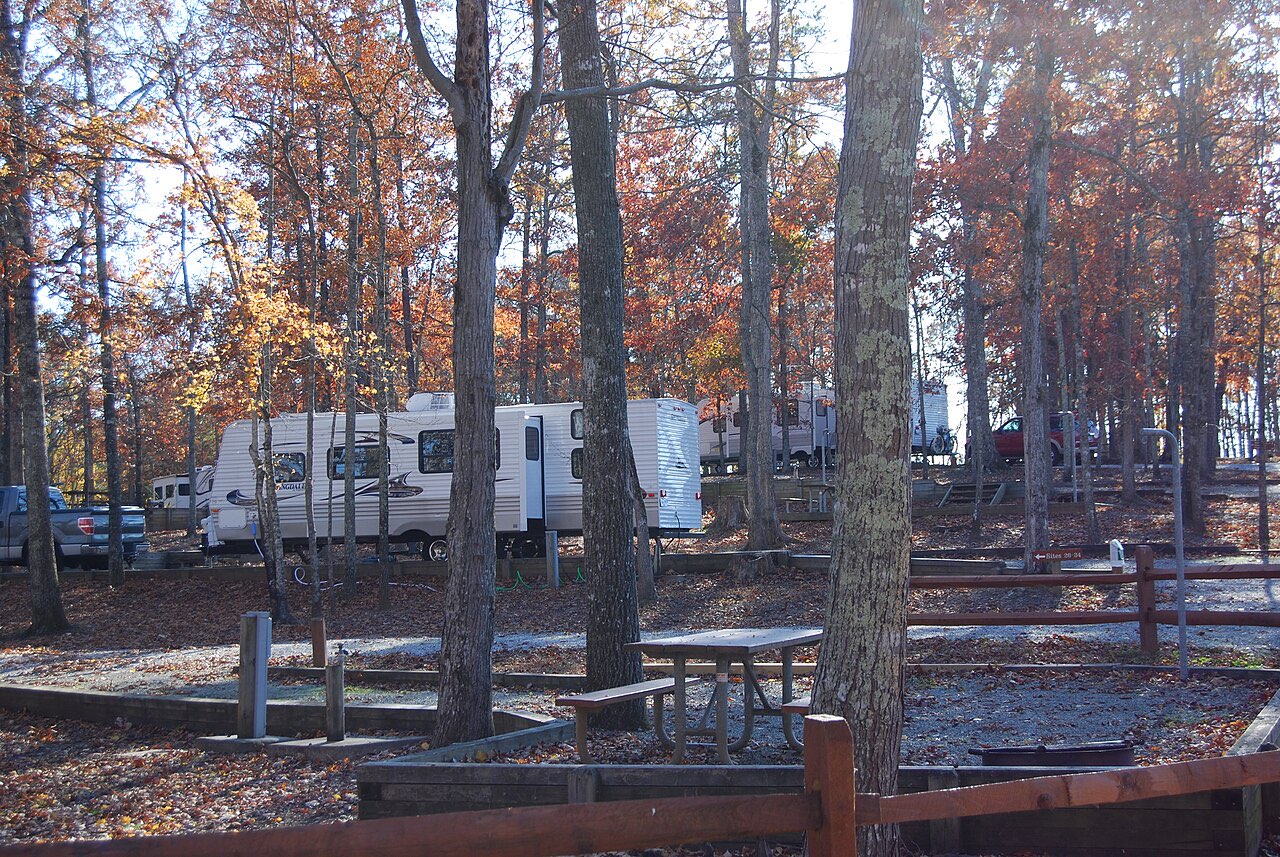
| Texas: Tyler State Park | $32 full hookup (Lakeview), $28 full hookup (Big Pine), $24 electric | Plus daily entrance fee per person (TPWD) |
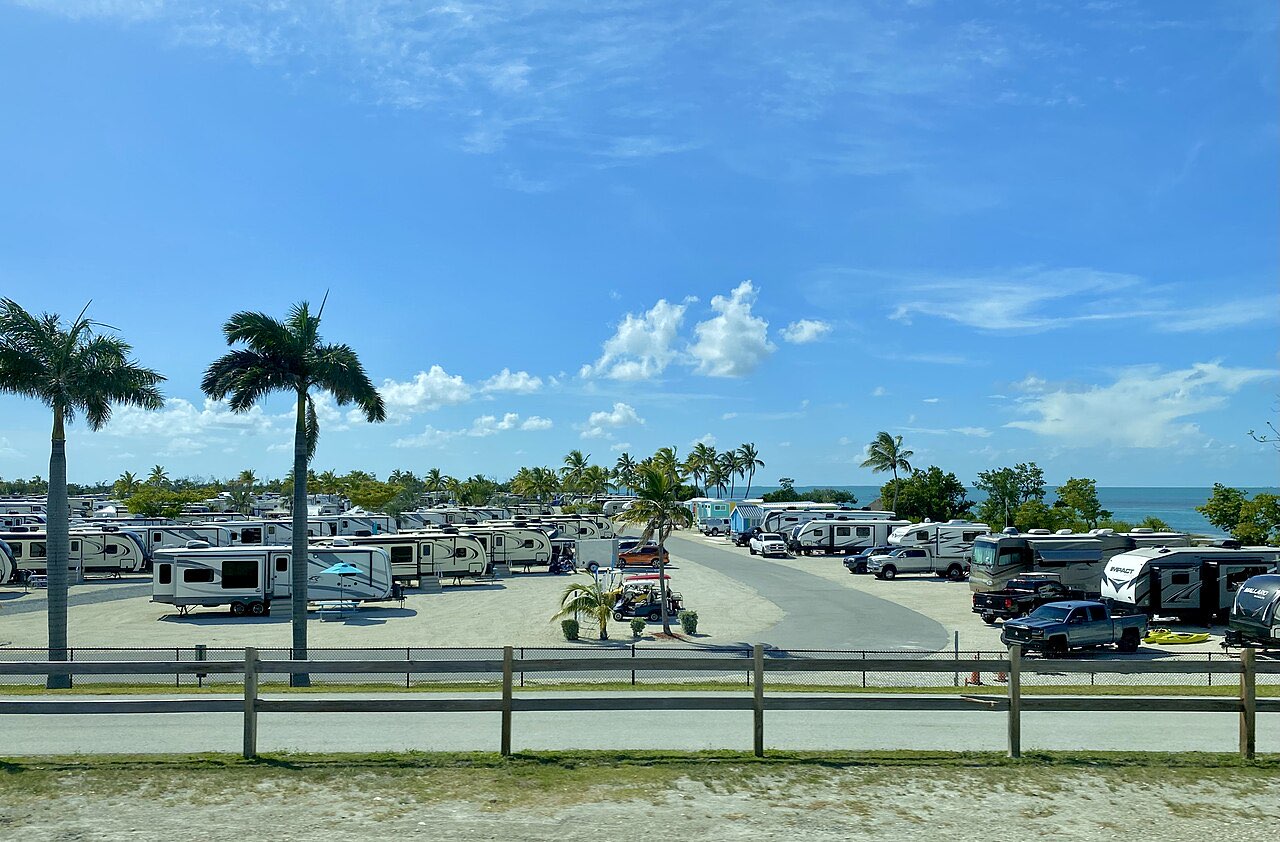
| Florida state parks | $16 to $42 base by park, plus $7 nightly utility fee on RV sites, plus $6.70 reservation fee per booking | Rodman Campground $22 base, Curry Hammock $36 base (Florida State Parks) |
| Harvest Hosts | $99 Classic, $169 with Boondockers Welcome, $179 All Access per year | One free night per host, buy something from the host (Harvest Hosts) |
| KOA Rewards | $39 a year for 10% off daily rates | Does not apply to weekly or monthly rates (KOA) |
| Thousand Trails Camping Pass | $775 regular annual dues, single region; $475 Trails Collection add-on | Per a May 2026 Good Sam promotion; confirm on thousandtrails.com |
Private parks and resorts publish no national average. Working figures that match the market in late 2026: $50 to $100 a night for a full-hookup site at an ordinary private park or KOA, $100 to $200-plus at destination resorts in Florida, Arizona and coastal areas in season, and monthly rates of $500 to $1,200 plus metered electricity at parks that offer them. Oregon’s parks commission approved full-hookup state sites up to $52 at its busiest parks with authority to go to $80, which shows where public rates are heading.
The lever is the mix. Thirty nights a month at $65 is $1,950. Thirty nights split ten on BLM land, ten in state parks and ten at a monthly-rate private park comes to roughly $700. Thirty nights at a $1,000 monthly site is $1,000 plus electric. A long-term reader on the differences is the RV camping options compared guide.
Fuel
The US Energy Information Administration’s weekly averages for the week of October 26, 2026 were $4.269 per gallon for regular gasoline and $6.352 for on-highway diesel (EIA). Towing fuel economy is what it is: a gas half-ton or three-quarter-ton pulling a travel trailer typically returns 8 to 11 mpg, a diesel pickup with a fifth wheel 9 to 12, a gas Class A 6 to 8, a diesel pusher 7 to 9. Those are planning ranges, not measurements.
| Monthly towing miles | Gas truck at 10 mpg | Diesel truck at 11 mpg | Gas Class A at 7 mpg |
|---|---|---|---|
| 500 | $213 | $289 | $305 |
| 1,000 | $427 | $577 | $610 |
| 2,000 | $854 | $1,155 | $1,220 |
Add the daily driver: a towed car or the truck unhitched, 500 to 800 miles a month at 20 to 25 mpg, roughly $90 to $170 in gasoline. Generator fuel for boondockers is a few gallons a week unless air conditioning is involved. The RV fuel cost per mile guide has the arithmetic for your own rig.
Fuel is the line most newcomers under-budget, because they plan the first year like a vacation (a new place every two or three days) instead of like a life. Two thousand towing miles a month is a vacation pace and roughly a thousand dollars; five hundred is a full-timer’s pace and a quarter of that.
The fixed lines
Insurance. Progressive’s published countrywide average for a 12-month RV policy in 2024 was $594 for a travel trailer and $1,052 for a motorhome (Progressive). Full-timer policies, which replace a homeowner’s liability and contents coverage, cost more than those averages; plan on $100 to $250 a month for a motorhome or a trailer plus truck with full-timer coverage, less for an older paid-off trailer. The RV insurance coverage guide covers what a full-timer endorsement actually adds.
Connectivity. Starlink’s Roam 100 GB plan has been reported at $50 a month since January 13, 2026, when it replaced the 50 GB plan at the same price, and Roam Unlimited at $165 a month, with a $5 standby mode; those figures are from trade reporting because Starlink’s site shows pricing only inside its order flow, so confirm there. Add one cellular line with hotspot data as backup, $40 to $90. Budget $90 to $250 total depending on whether you work from the rig.
Mail and domicile. Escapees’ mail service lists annual categories at $110, $130 and $150 plus a $50 enrollment fee and a $50 postage deposit, with scanning $10 a month (Escapees). Spread across the year, $15 to $30 a month including postage. Vehicle registration and any domicile-state costs vary too much to average.
Roadside assistance. Good Sam and similar RV plans are commonly quoted at $65 to $120 a year; Good Sam’s own pricing page was not readable at the time of writing, so confirm. Call it $10 a month.
Maintenance and tires. No official figure exists. A workable planning rule is 1 to 2 percent of the rig’s value per year for repairs plus a tire fund: a set of six Load Range E trailer or truck tires every five to seven years. For a $60,000 trailer and a $55,000 truck that is roughly $100 to $200 a month in repairs plus $40 to $60 a month toward tires, set aside whether or not it is spent. Age the fund, do not spend it, because the first failed slide motor or wheel bearing costs four figures.
Propane. A 30 lb cylinder holds about 7 gallons; refills vary regionally, commonly $3 to $5 a gallon in late 2026. Two cylinders a month in winter with furnace use, one every two months in summer with hookups. $10 to $50 a month.
Electricity at monthly sites. Parks that offer monthly rates almost always meter electricity separately. Air conditioning in a southern summer can run 600 to 1,200 kWh a month; at local rates that is $80 to $200. Nightly rates include it.
Food, phone, health insurance, subscriptions, pets. Same as in a house, with one adjustment: full-timers eat out more in the first year than they expect. These are left out of the budgets below so the RV-specific lines stand on their own.
Three monthly budgets
All three exclude any RV or truck payment, food, phones and health insurance. Campground and fuel lines are built from the official and working figures above; the rest are the fixed-line estimates. Round numbers, because that is what a budget is.
| Line | Slow boondocker (couple, paid-off trailer) | Mixed traveler (couple, mid-size rig) | Fast resort family (four people, large rig) |
|---|---|---|---|
| Nights pattern | 20 BLM/dispersed, 6 state park, 4 Harvest Hosts | 10 state park, 10 private park, 10 BLM or Thousand Trails | 25 resort/private at $90, 5 state park |
| Campground fees | $230 | $700 | $2,450 |
| Towing fuel (gas, 10 mpg) | $213 (500 mi) | $427 (1,000 mi) | $1,220 (2,000 mi, Class A at 7 mpg) |
| Daily-driver fuel | $90 | $130 | $170 |
| Insurance (full-timer) | $90 | $150 | $250 |
| Connectivity | $90 | $140 | $250 |
| Propane and generator fuel | $60 | $30 | $30 |
| Metered electric | $0 | $40 | $120 |
| Maintenance and tire fund | $150 | $200 | $350 |
| Mail, roadside, memberships (annualized) | $60 | $110 | $120 |
| Laundry, dump fees, misc | $60 | $80 | $120 |
| RV-specific total | $1,040 | $2,010 | $5,080 |
| Add typical food/phone/health for the group | $750 to $1,400 | $1,000 to $1,800 | $1,800 to $2,800 |
| All-in, no RV payment | $1,800 to $2,450 | $3,000 to $3,800 | $6,900 to $7,900 |
Add a rig payment if you have one. A new truck and a new 30-foot trailer financed together can easily add $1,200 to $1,800 a month, which turns the mixed traveler’s $3,500 into $5,000. The rent vs buy guide and the first-year ownership cost guide cover the capital side; this page is about running costs.
Who each budget is for
The slow boondocker moves every one to two weeks, winters on BLM land in Arizona and summers in national forests, carries solar and a generator, and treats a $30 state park night as a splurge for the showers and dump. The trade is self-sufficiency: tanks, batteries, water discipline and the willingness to be an hour from a grocery store. The boondocking for beginners guide and the RV solar basics guide describe what the rig needs to make this work.
The mixed traveler is most full-timers: a week here, two weeks there, state parks where they are good, a monthly-rate private park for a month in winter, some public land. A Thousand Trails pass can replace most of the private-park line for people whose route matches its park map, which is heavily coastal and northeastern; its in-and-out rules (14 nights in, then out for a week after any stay of five or more nights, per member reporting) suit this rhythm.
The fast resort family is living a vacation, and the budget says so. It is a legitimate way to spend a year, and it is roughly what a family spends on a mortgage and utilities in many cities, but it is not a cheap way to live. Slowing to 1,000 miles a month and swapping half the resort nights for state parks drops the total by more than $2,000.
How to cut the number without cutting the trip
- Move less. Halving miles halves fuel and tends to halve nightly fees, because longer stays unlock weekly and monthly rates.
- Buy the memberships that match your map, not all of them. Harvest Hosts pays off in agricultural regions and on travel days; Thousand Trails only where its parks are; KOA Rewards only if you use KOAs a dozen nights a year.
- Winter on a BLM LTVA permit. $180 for seven months, with a dump station and water, is the single largest saving available to anyone with decent tanks and solar.
- Take monthly rates in the expensive season. A $1,000 month in a Florida private park in February beats $90 nights by $1,700.
- Weigh the rig and keep tires young. Overloaded axles and aged tires are the two expensive failures that are entirely avoidable; a $15.25 CAT scale pass once a season is cheap insurance.
- Fund maintenance monthly. The budgets that collapse are the ones where a $3,000 repair meets a $0 fund and goes on a card.
Mistakes in first-year budgets
- Planning a year of travel at vacation pace.
- Budgeting nightly fees at state-park prices and then staying at private parks because they have availability.
- Forgetting metered electricity on monthly sites.
- Treating the maintenance line as optional.
- Buying the rig for the budget you hope to have rather than the one you have; a paid-off used trailer changes everything about the numbers above.
- Assuming full-timer insurance costs what weekend insurance did.
The short version
Two adults in a paid-off rig moving slowly and using public land can live on under $2,500 a month all-in. A typical couple mixing state parks, private parks and some public land spends $3,000 to $4,000. A family moving fast between resorts spends what a house does. Official prices above (BLM, Texas and Florida state parks, EIA fuel, KOA Rewards, Harvest Hosts, Progressive’s 2024 averages, Escapees) were read on October 28, 2026; Thousand Trails, Starlink and roadside figures are from recent published reporting because the companies’ own pages could not be read, and every line on this page should be re-checked against the operator before it goes in your spreadsheet.
Frequently asked questions
How much does full-time RV living cost per month?
Using October 2026 official prices for the items that have them, a slow-moving boondocking couple can live on roughly $1,800 to $2,500 a month excluding any RV payment, a mixed state-park and private-park traveler on about $3,000 to $4,000, and a resort-hopping, fast-moving family on $5,000 to $7,000 or more. Campground fees and fuel are the two lines that move most, and travel speed drives both.
What does a campsite cost per night?
Official 2026 examples: Texas state park full-hookup sites $28 to $32 at Tyler State Park plus the daily entrance fee; Florida state parks $16 to $42 base plus a $7 utility fee and a $6.70 reservation fee per booking; BLM Long Term Visitor Areas $180 for a seven-month permit or $40 for 14 days. Private parks and resorts have no official average; full-hookup rates commonly run $50 to $100 a night and far more at destination resorts, with monthly rates usually a third to a half of the nightly equivalent.
How much is fuel for a full-time RVer?
The EIA's US average for the week of October 26, 2026 was $4.269 a gallon for regular gasoline and $6.352 for on-highway diesel. A gas truck towing a travel trailer at 10 mpg and covering 1,000 miles a month spends about $427; a diesel pickup at 11 mpg towing the same distance spends about $577. Halve the miles and you halve the line, which is why slow travel is the biggest single budget lever.
Is a Thousand Trails membership worth it for full-timers?
A single-region Camping Pass carries regular annual dues of $775 according to a May 2026 Good Sam promotion, with a $475 Trails Collection add-on for more parks. Stay rules reported by members allow up to 14 nights per stay with a seven-night break after stays of five nights or more. At even $40 a night, 20 nights a year covers the pass; a full-timer who uses it 100-plus nights pays under $8 a night. The limits are park location and the in-and-out rule, not price. Confirm current dues and rules on thousandtrails.com.
What does RV internet cost?
Starlink's Roam plans as reported in January 2026 are $50 a month for 100 GB of priority data and $165 a month for Roam Unlimited, with a $5 standby mode; Starlink's own site renders prices only inside its ordering flow, so confirm there. Most full-timers who work pair Starlink with one cellular plan as a backup, so budget $90 to $250 a month for connectivity.
How much should I set aside for RV maintenance?
There is no official figure. A common planning rule is 1 to 2 percent of the RV's value per year plus tires on a 5 to 7 year cycle; for a $60,000 rig that is $50 to $100 a month before tires. Roadside assistance from Good Sam or similar runs roughly $65 to $120 a year for RV plans by most published figures. Treat the set-aside as a real monthly transfer, because the first big repair always arrives before the fund does.
Keep planning
- First-Year RV Ownership Costs You Don't See at the Dealer
First-year RV ownership costs beyond the sticker: sales tax, registration, insurance, storage, hitch gear, tires, warranties and depreciation, with official figures.
Updated Oct 2026 - 30 Amp vs 50 Amp RV Hookups Explained
30 amp vs 50 amp RV service explained: 3,600 vs 12,000 watts, what runs at once, dogbone adapters, pedestal testing and the voltage limits an EMS enforces.
Updated Oct 2026 - Boondocking for Beginners: Rules, Water and Power
Boondocking for beginners: BLM and Forest Service dispersed camping rules, 14-day limits, Motor Vehicle Use Maps, Leave No Trace, water and power budgets.
Updated Oct 2026