RV Water Filters: Inline vs Canister Systems Compared
In this guide
For most RVers, a disposable inline carbon filter certified to NSF/ANSI 42, changed every season, is all the filtration a treated campground supply needs. Full-timers and anyone who fills from hard or rusty water do better with a reusable canister system that takes replaceable cartridges, typically a sediment stage followed by a finer carbon stage. Neither type makes untreated water safe to drink: that takes reverse osmosis, nanofiltration or an absolute-rated filter at 0.3 micron or finer, according to the CDC, and most RV filters are none of those.
This guide explains what filters actually do, how to read micron and NSF ratings, inline versus canister setups, change intervals and the products worth buying. Sources are the CDC’s guide to water filters, the plumbing section of a Jayco owner’s manual, and the filter makers’ own listings, read in October 2026.
What an RV water filter does, and does not do
Campground water in the US usually comes from a treated public system, often chlorinated. The reasons to filter it are practical:
- Taste and smell. Chlorine and sulfur tastes are the most common complaint; activated carbon reduces them.
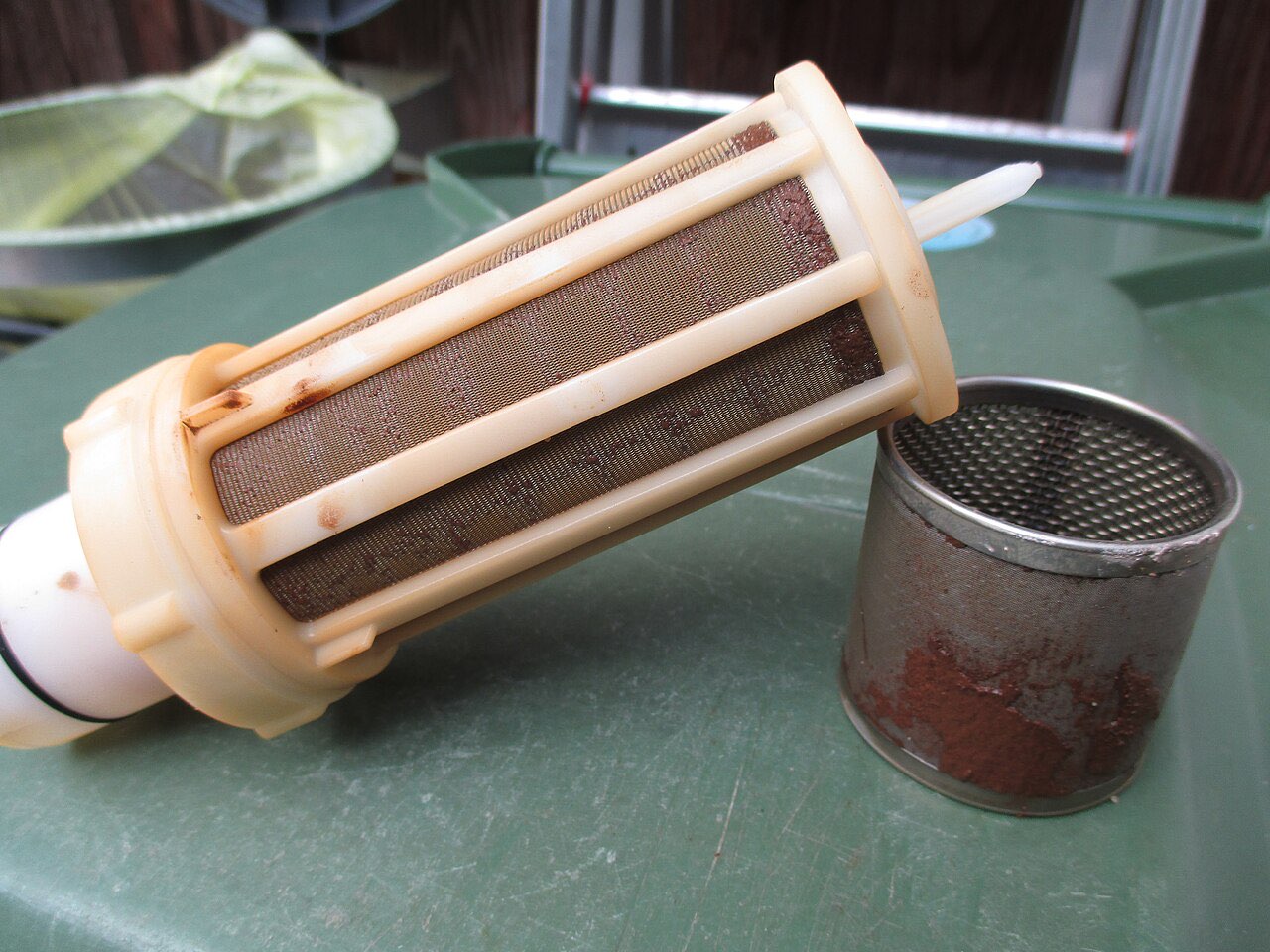
- Sediment. Rust, sand and scale from old campground pipes end up in faucet aerators, toilet valves and the water heater tank.
- Some chemical contaminants, depending on the certification. The CDC’s point is that a filter removes only what its label says it removes, and that filters which remove germs often do not remove chemicals, and the other way round.
What a typical RV filter does not do is turn an unknown source into drinking water. Jayco’s manual is blunt: do not drink water deemed microbiologically unsafe or of unknown quality. Filling from a potable spigot and sanitizing the system, covered in our fresh water system guide, is what keeps the water safe. The filter makes good water taste better.
Reading the ratings: microns and NSF
Micron ratings describe the size of particle a filter stops. A micron is a thousandth of a millimeter. The CDC draws one distinction that matters on every box:
- Nominal rating means the average pore is that size; some pores are larger, so some particles of that size get through.
- Absolute rating means every pore is that size or smaller.
A “5 micron” sediment cartridge is a nominal rating unless it says otherwise. That is fine for grit and rust; it is not a germ barrier.
NSF/ANSI standards are independent tests that a product either passes for a specific claim or does not:
| Standard | What it covers (per the CDC and the standards’ scopes) | What it means for an RV |
|---|---|---|
| NSF/ANSI 42 | Aesthetic effects: taste and odor, chlorine | The baseline for an RV carbon filter |
| NSF/ANSI 53 | Health-related contaminants; with “cyst reduction” on the label, parasites such as Cryptosporidium | Read the label for exactly which contaminants are listed |
| NSF/ANSI 58 | Reverse osmosis systems | Under-sink RO units in larger rigs |
| NSF/ANSI 372 | Lead content of the product’s own materials | Means the brass and fittings are low-lead, not that the filter removes lead |
The CDC’s germ table, in short: parasites need an absolute 1 micron or finer filter, or NSF 53 or 58 certification for cyst reduction; bacteria need absolute 0.3 micron or finer, ultrafiltration, nanofiltration or reverse osmosis; viruses need nanofiltration or reverse osmosis. The CDC advises looking for the NSF certification on the label to see what a filter will remove.
Inline vs canister systems
| Inline (disposable) | Canister (reusable housing) | |
|---|---|---|
| What it is | A sealed cylinder with hose threads, spent unit thrown away | One to three housings that take standard replaceable cartridges |
| Typical media | Carbon (often with KDF) behind a coarse sediment screen | Sediment stage (often around 5 micron) then carbon block; some add a finer stage |
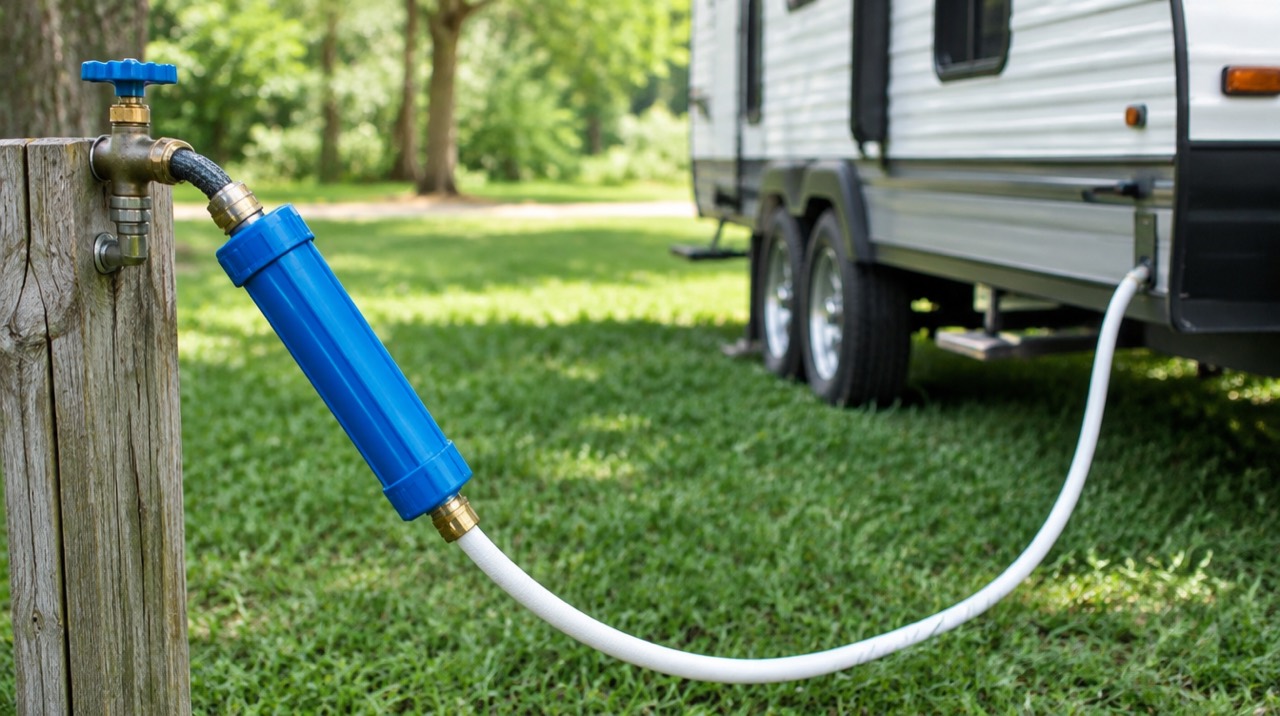
| Setup | Screws between regulator and hose; seconds | Stands on the ground or mounts in a bay; hoses between stages |
| Filtration | Taste, odor, coarse sediment | Finer sediment and carbon; options for sub-micron stages |
| Running cost | Replace the whole unit | Replace cartridges only |
| Best for | Weekend and seasonal campers on treated water | Full-timers, hard or rusty water, people who want finer filtration |
Some RVs have a built-in canister under a sink. Jayco’s manual describes one: shut the valves either side, release pressure with the button on top, unscrew the housing with a spanner, clean it, re-grease the O-ring, fit the new cartridge and check for leaks. It has no bypass, so the cartridge must come out before sanitizing or winterizing.
Where it goes in the hose line
From the spigot: pressure regulator, then filter, then drinking-water hose, then the RV’s city water inlet. The regulator first means the filter housing never sees full campground pressure, which matters for canister housings in particular. Our water pressure regulator guide covers the numbers. Let water run through a new filter for a minute or two before connecting the hose to flush carbon fines, and Jayco suggests letting water flow for several minutes if the system has not been used for a while.
When to change cartridges
| Trigger | Source |
|---|---|
| Start of every camping season | Jayco owner’s manual |
| After contact with contaminated water | Jayco owner’s manual |
| About one camping season of typical use (Evo cartridge) | Camco’s listing |
| Flow drops noticeably, or taste and smell return | General practice |
| Before sanitizing or winterizing: remove, do not run chemicals through it | Jayco owner’s manual |
Store spare and partly used cartridges out of freezing temperatures; Jayco notes that RV antifreeze damages them and that the housing itself must not freeze. A cartridge that sat wet all winter is better replaced than reused.
Boondocking and tank water
If you fill the fresh tank and run on the pump, a filter on the fill hose cleans what goes into the tank, and an under-sink drinking-water filter can treat what comes out of the kitchen tap. Neither replaces sanitizing the tank on schedule. When you are carrying limited water, a cartridge that slows the flow slows your fill too; that is a reason to bring a fresh one, not to skip it. Our boondocking guide has the water budget.
Choosing in three questions
1. Is your water source treated? If you camp at developed campgrounds with posted potable water, your goal is taste and sediment, and an NSF/ANSI 42 carbon filter covers it. If you regularly fill from wells, farm spigots or anywhere the potable status is unclear, the filter is not the answer; a known potable source is. Where you want a germ barrier for drinking water specifically, the CDC’s table points to reverse osmosis, nanofiltration or an absolute 0.3 micron filter, which usually means a dedicated under-sink drinking-water unit rather than a hose filter.
2. How much grit is in it? Rusty orange stains in the toilet bowl, gritty aerators and a water heater that rumbles are signs of sediment. A canister system with a separate sediment stage in front of the carbon stage keeps the carbon from clogging early, and the sediment cartridge is the cheap one you change most often.
3. How many nights a year? A disposable inline filter is cheap enough to replace every spring for a seasonal camper. Past a few months of continuous use, a reusable housing with replaceable cartridges usually costs less and filters finer, which is why full-timers tend to move to one.
Whichever you pick, buy one with the certification printed on the box and the contaminant list you care about, not a vague “purifies” claim.
Mistakes to avoid
- Treating a filter as a purifier. A taste-and-odor filter does nothing for bacteria or viruses.
- Reading NSF/ANSI 372 as a filtration claim. It is about lead in the product’s own materials.
- Sanitizing with the cartridge installed. The carbon absorbs the chlorine and downstream lines stay dirty.
- Running RV antifreeze through the filter. Jayco says it damages the cartridge.
- Leaving a filter on the spigot on a freezing night.
- Putting the filter before the regulator. The housing takes full pressure.
- Keeping the same cartridge for years because the water still runs.
Gear that helps with this job
Pick by how you camp. Both of these are maker-listed as lead-free, and the inline unit carries the NSF/ANSI 42 taste-and-odor listing that matters most for campground water.
As an Amazon Associate we earn from qualifying purchases.
- For most people: the Camco TastePURE inline RV water filter (model 40043). Camco lists it as independently tested and listed to NSF/ANSI 42 and NSF/ANSI 53, with GAC and KDF media behind a 20-micron sediment screen, and a flexible hose protector to stop kinking at the spigot. Screw it on after the regulator and replace it each season. Check the box for exactly which contaminants the 53 listing covers.
 $20.82Price as of November 16, 2026, 10:00 AM ET. Prices and availability are accurate as of the date/time indicated and are subject to change. Any price and availability information displayed on Amazon.com at the time of purchase will apply to the purchase of this product.
- For full-timers who want a replaceable cartridge: the Camco Evo RV water filter kit (model 40631). It is a reusable housing with an extension hose and a replaceable cartridge; Camco describes a 5-micron outer shell followed by KDF and GAC, with a typical life of one camping season per cartridge. You keep the housing and buy only cartridges.
Prices and listings change; check the current listing before you buy.
Ratings and intervals above are from the CDC, Jayco’s owner’s manual and the makers’ listings as read in October 2026. If your RV has a built-in filter, its manual governs cartridge type and the change procedure. For the rest of the water side of a first season, see our RV maintenance schedule.
Frequently asked questions
Do I need a water filter for my RV?
Not for safety on a treated campground supply, but most owners use one for taste, smell and sediment. Campground water is often chlorinated, hard or carries rust and grit from old pipes, and a basic carbon filter improves taste and protects faucet cartridges and the water heater from sediment. A filter is not a substitute for a safe source or for sanitizing the fresh water system.
What is the difference between an inline and a canister RV water filter?
An inline filter is a sealed, disposable cylinder that screws between the spigot and the hose; you throw the whole thing away when it is spent. A canister system is a reusable housing, or two or three in a row, that holds replaceable cartridges, so you can choose finer stages and pay only for cartridges. Inline is simpler and cheaper to start; canisters filter finer and suit full-timers.
What do NSF/ANSI 42 and 53 mean on a water filter?
They are independent test standards. The CDC lists NSF/ANSI 42 as the standard for taste and odor and NSF/ANSI 53 or 58, specifically for cyst reduction or removal, for filters that remove parasites such as Cryptosporidium. A 53 listing alone does not tell you what it covers; check the label for the specific contaminants the filter is certified to reduce.
How often should I change my RV water filter?
At least once a camping season, and immediately if it has been exposed to contaminated water. Jayco's owner's manual says to replace filters at the start of each camping season or after contact with contaminated water, and Camco describes its Evo cartridge as lasting about one season. Change it sooner if flow drops noticeably or taste returns.
Will an RV water filter make lake or creek water safe to drink?
No. Most RV filters are built for taste, odor and sediment on treated water. The CDC says only filters with an absolute pore size of 0.3 micron or smaller, ultrafiltration, nanofiltration or reverse osmosis remove bacteria, and only nanofiltration and reverse osmosis remove viruses. Jayco's manual says not to drink water of unknown quality. Fill from a potable source.
Should I remove the RV water filter before sanitizing or winterizing?
Yes. Jayco's manual says canister filters have no bypass and the cartridge must be removed before sanitizing or winterizing, that RV antifreeze damages the cartridge, and that the housing must not freeze. Carbon also absorbs the chlorine you are sanitizing with, so the lines downstream would not be disinfected with the cartridge in place.
Keep planning
- How to Use an RV Dump Station Step by Step
How to use an RV dump station: black-then-gray order, hose setup, rinsing, chemicals, where to find free stations, typical fees and what never goes down the drain.
Updated Nov 2026 - RV Sewer Hose Setup: Length, Supports and Fittings
RV sewer hose setup explained: what length to carry, the clear elbow and 4-in-1 adapter, hose supports for a steady downhill run, valve habits and clean storage.
Updated Nov 2026 - RV Gear and Upgrades: Measure Before You Order
Fit guide for RV steps, bunk ladders, windows, shades, hose tubes, tote carriers and vents. Sizes come from the Amazon listings, including where a listing disagrees.
Updated Nov 2026